MBA Programs With AI Curriculum: What Top Business Schools Are Building

If you’re researching MBA programs with AI curriculum, one theme is clear: artificial intelligence is no longer an elective at top business schools. It’s becoming central to what an MBA education means. Here’s what the leading programs are building, and what it means for your application.
Deep Integration at Harvard Business School
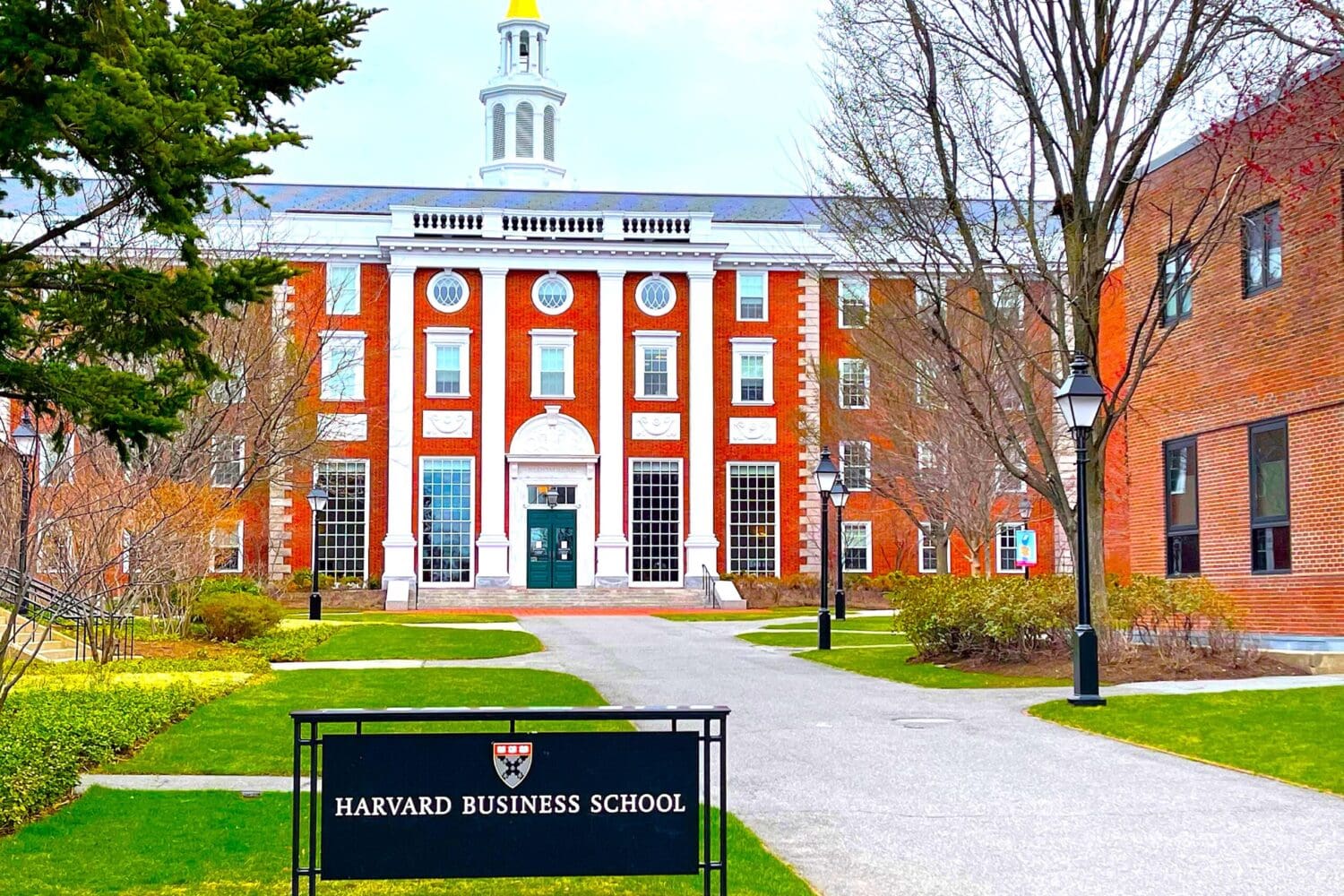
HBS has made some of the most sweeping institutional changes of any business school. It started with the introduction of Data Science and AI for Leaders (DSAIL), a required first-year course taken by all 935 members of each entering class.
But as Katharine Chavez and Siena Devine Guzmán reported in The Harvard Crimson, AI has since spread well beyond that single course into marketing, entrepreneurship, and organizational behavior classes, with faculty building live simulations, AI avatars, and hands-on exercises directly into case discussions.
Students now have access to a broad suite of tools, including ChatGPT, Claude, Lovable, and Julius AI. The required course itself has been restructured into three modules covering how AI transforms workplace tasks, how it enables new business models, and questions of AI safety and governance.
What’s notable is what this is doing to the classroom dynamic. Because students arrive better prepared after using AI tools in their case prep, faculty report that discussions have become sharper.
Professor Rembrand Koning described it as AI heightening “our ability to have really rich discussions and sort of get to the core business ideas.” The famous case method isn’t being replaced. It’s being intensified.
What This Means for the Job Market
The job market implications are equally direct. Koning was unambiguous: “If you want to get a job out of the MBA program, you need to know how to use these AI tools, because they’re already part of the interview process at all the big tech companies, increasingly consulting, even in private equity.” HBS Dean Srikant Datar has framed the broader shift as preparation for leaders who can use AI, scale it, govern it, and navigate its ethical dimensions.
HBS has a history of early adoption of technology. In fall 2023, HBS gave all MBA students access to GPT-4. Faculty say no other leading business school had done the same. The move fits a pattern. In 1984, it was among the first business schools to require students to own a personal computer.
Stanford GSB: Fluency Over Literacy
Stanford GSB, meanwhile, is taking a distinctly hands-on approach. While many schools are adding AI to their syllabi, Stanford has moved toward what students describe as genuine fluency rather than literacy. In 2025-26, roughly three dozen courses at the GSB integrated AI or machine learning, ranging from technically focused electives to big-picture strategy courses.
Even the school’s famous Startup Garage now opens with an AI-powered hackathon. Dean Sarah Soule has framed the school’s goal as twofold: expose students to the latest tools and thinking while doubling down on the human capabilities machines cannot replace. “If we get the leadership piece right, and give them the technical skills they’re going to need,” she tells Poets & Quants, “then we’ll be in a very good place.”
Perhaps the most telling signal is student-driven. AI@GSB, a dean-backed initiative founded by four second-year MBAs, has become one of the most visible forces shaping how Stanford students engage with AI outside the classroom. The school’s Artificial Intelligence Club is now the largest MBA student organization on campus, surpassing even the Entrepreneurship Club.
The initiative’s philosophy is deliberately practical: students are expected to build real things with AI tools, not just learn about them in the abstract. Co-founder Jenni Steiger, a former BlackRock chief of staff with no technical background, put it plainly to Poets & Quants: “A lot of schools are starting to teach about it. But they’re not doing the applied AI the way we are.”
Stanford’s location helps too. As co-founder Alfredo Mendez noted, employer expectations have already shifted: “You are from Stanford so you are going to teach us.”
Other MBA Programs With AI Curriculum Worth Knowing
HBS and Stanford GSB lead the pack, but MBA programs with AI curriculum are now found across the M7 and beyond. For example, Wharton launched a full MBA major in Artificial Intelligence for Business starting Fall 2025, covering applied machine learning, data science, neuroscience, and AI ethics. Dean Erika James framed it plainly: it is no longer a question of whether AI will reshape business, but how.
Kellogg, meanwhile, introduced AI Foundations for Managers, a cross-disciplinary flagship course taught simultaneously by faculty from five departments, allowing students to explore AI through the lens most relevant to their goals. Advanced electives cover human and machine intelligence, AI and the future of work, and applied analytics.
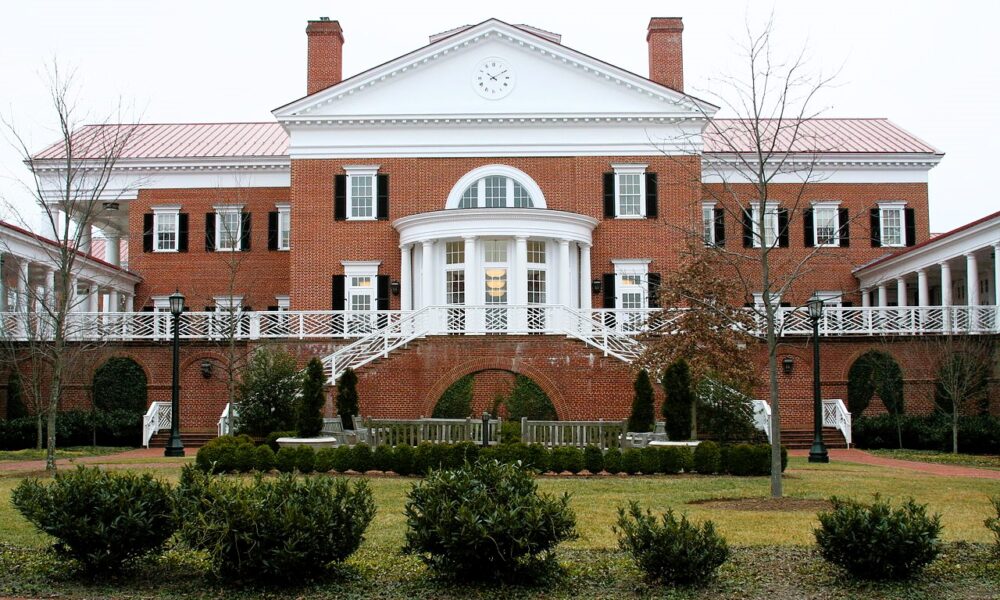
Last spring, UVA Darden unveiled an AI MBA concentration in Data Analytics and Decision Sciences with 25 course options and deepened its commitment by creating the LaCross Institute for Ethical Artificial Intelligence in Business.
Michigan Ross introduced a three-part AI concentration framework spanning AI fundamentals, AI and business models, and AI and society, with cross-campus access to courses offered by the School of Information and the College of Engineering.
Position Yourself as an AI-Ready Applicant
The cumulative signal from these programs is hard to miss. AI fluency is becoming a baseline expectation, not a differentiator. That has real implications for how you approach your application.
First, if AI tools aren’t already part of your professional toolkit, start building familiarity with them now. Second, think carefully about how your essays and interviews frame your relationship to technology. The schools above aren’t looking for engineers. They’re looking for people who can lead in environments where AI shapes decisions, teams, and strategy.
Third, think long term. The program you choose today will likely look meaningfully different by the time you graduate. Schools building this infrastructure now are the ones best positioned to deliver. Employer expectations aren’t waiting.
The MBA isn’t becoming a tech degree. But the bar has shifted. Curiosity, adaptability, and a working relationship with AI tools are now part of what top programs expect.
AI fluency is becoming part of the MBA admissions conversation. If you’re ready to make your application reflect that, SBC’s team knows exactly how to frame it. Start with a free 15-minute advising session.
Here’s a snapshot of the caliber of expertise on our SBC team.






Ashley
Ashley is a former MBA Admissions Board Member for Harvard Business School (HBS), where she interviewed and evaluated thousands of business school applicants for over a six year tenure. Ashley holds an MBA from HBS. During her HBS years, Ashley was the Sports Editor for the Harbus and a member of the B-School Blades Ice Hockey Team. After HBS, she worked in Marketing at the Gillette Company on Male and Female shaving ...
×Pauline
A former associate director of admissions at Harvard Business School, Pauline served on the HBS MBA Admissions Board full-time for four years. She evaluated and interviewed HBS applicants, both on-campus and globally. Pauline's career has included sales and marketing management roles with Coca-Cola, Gillette, Procter & Gamble, and IBM. For over 10 years, Pauline has expertly guided MBA applicants, and her clients h ...
×Laura
Laura comes from the MBA Admissions Board at Harvard Business School (HBS) and is an HBS MBA alumnus. In her HBS Admissions role, she evaluated and interviewed hundreds of business school candidates, including internationals, women, military and other applicant pools, for five years. Prior to her time as a student at HBS, Laura began her career in advertising and marketing in Chicago at Leo Burnett where she worked on th ...
×Andrea
Andrea served as the Associate Director of MBA Admissions at Harvard Business School (HBS) for over five years. In this role, she provided strategic direction for student yield-management activities and also served as a full member of the admissions committee. In 2007, Andrea launched the new 2+2 Program at Harvard Business School – a program targeted at college junior applicants to Harvard Business School. Andrea has also served as a Career Coach for Harvard Business School for both cu ...
×Jennifer
Jennifer served as Admissions Officer at the Stanford (GSB) for five years. She holds an MBA from Stanford (GSB) and a B.S. in Chemical Engineering from University of Illinois Urbana-Champaign. Jennifer has over 15 years experience in guiding applicants through the increasingly competitive admissions process into top MBA programs. Having read thousands and thousands of essays and applications while at Stanford (GSB) Admiss ...
×Davina
Davina received her MBA from Stanford's Graduate School of Business (GSB), with a certificate in Public Management, and her BA in Psychology from UC Berkeley. Davina is an experienced strategic planning leader, facilitator, and business case writer who spent more than 15 years building culture, entrepreneurship, and leadership initiatives across Stanford University and the Stanford Graduate School of Business. She designed ...
×Erin
Erin served in key roles in MBA Admissions--as Director at Haas School of Business at UC Berkeley and Assistant Director at Stanford's Graduate School of Business (GSB). Erin served on the admissions committee at each school and has read thousands of applications in her career. At Haas, she served for seven years in roles that encompassed evaluation, outreach, and diversity and inclusion. During her tenure in Admissions at GSB, she was responsible for candidate evaluation, applicant outreach, ...
×Susie
Susie comes from the Admissions Office of the Stanford Graduate School of Business where she reviewed and evaluated hundreds of prospective students’ applications. She holds an MBA from Stanford’s GSB and a BA from Stanford in Economics. Prior to advising MBA applicants, Susie held a variety of roles over a 15-year period in capital markets, finance, and real estate, including as partner in one of the nation’s most innovative finance and real estate investment organizations. In that r ...
×Dione
Dione holds an MBA degree from Stanford Business School (GSB) and a BA degree from Stanford University, where she double majored in Economics and Communication with concentrations in journalism and sociology. Dione has served as an Admissions reader and member of the Minority Admissions Advisory Committee at Stanford. Dione is an accomplished and respected advocate and thought leader on education and diversity. She is ...
×Anthony
Anthony served as the Associate Director of MBA Admissions at the Wharton School at the University of Pennsylvania, where he dedicated over 10 years of expertise. During his time as a Wharton Admissions Officer, he read and reviewed thousands of applications and helped bring in a class of 800+ students a year. Anthony has traveled both domestically and internationally to recruit a ...
×Meghan
Meghan served as the Associate Director of Admissions and Marketing at the Wharton MBA’s Lauder Institute, a joint degree program combining the Wharton MBA with an MA in International Studies. In her role on the Wharton MBA admissions committee, Meghan advised domestic and international applicants; conducted interviews and information sessions domestically and overseas in Asia, Central and South America, and Europe; and evaluated applicants for admission to the program. Meghan also managed ...
×Amy
Amy comes from the Wharton School of the University of Pennsylvania where she was Associate Director. Amy devoted 12 years at the Wharton School, working closely with MBA students and supporting the admissions team. During her tenure at Wharton, Amy served as a trusted adviser to prospective applicants as well as admitted and matriculated students. She conducted admissions chats with applicants early in the admissions ...
×Ally
Ally brings six years of admissions experience to the SBC team, most recently as an Assistant Director of Admission for the full-time MBA program at Columbia Business School (CBS). During her time at Columbia, Ally was responsible for reviewing applications, planning recruitment events, and interviewing candidates for both the full-time MBA program and the Executive MBA program. She traveled both internationally and dome ...
×Emma
Emma comes from the MBA Admissions Office at Columbia Business School (CBS), where she was Associate Director. Emma conducted dozens of interviews each cycle for the MBA and EMBA programs, as well as coordinating the alumni ambassador interview program. She read and evaluated hundreds of applications each cycle, delivered information sessions to audiences across the globe, and advised countless waitlisted applicants. ×
Dana
Dana served as Assistant Director of Admissions at Columbia Business School for the Full-Time MBA program and has over 10 years of experience working in higher education. Known as a scrupulous file reader, Dana reviewed countless applications and assisted in rendering final decisions for the Admissions Committee at CBS. While leading information sessions at Columbia and on the road, Dana met and advised myriad applicants� ...
×Holly
Holly worked as a member of the NYU Stern MBA Admissions team for seven years and holds an MBA from NYU Stern. In her tenure as Director of NYU MBA Admissions, Holly worked closely with admissions teams from Columbia, Michigan Ross, UVA Darden, Cornell Johnson, Berkeley Haas, Yale SOM, and Duke Fuqua on recruiting events domestically and internationally. On the NYU Stern admissions committee, Holly conducted interviews, planned and hosted events, and trained staff on reading and interviewi ...
×