HEC Paris Essays and Tips for 2026-2027
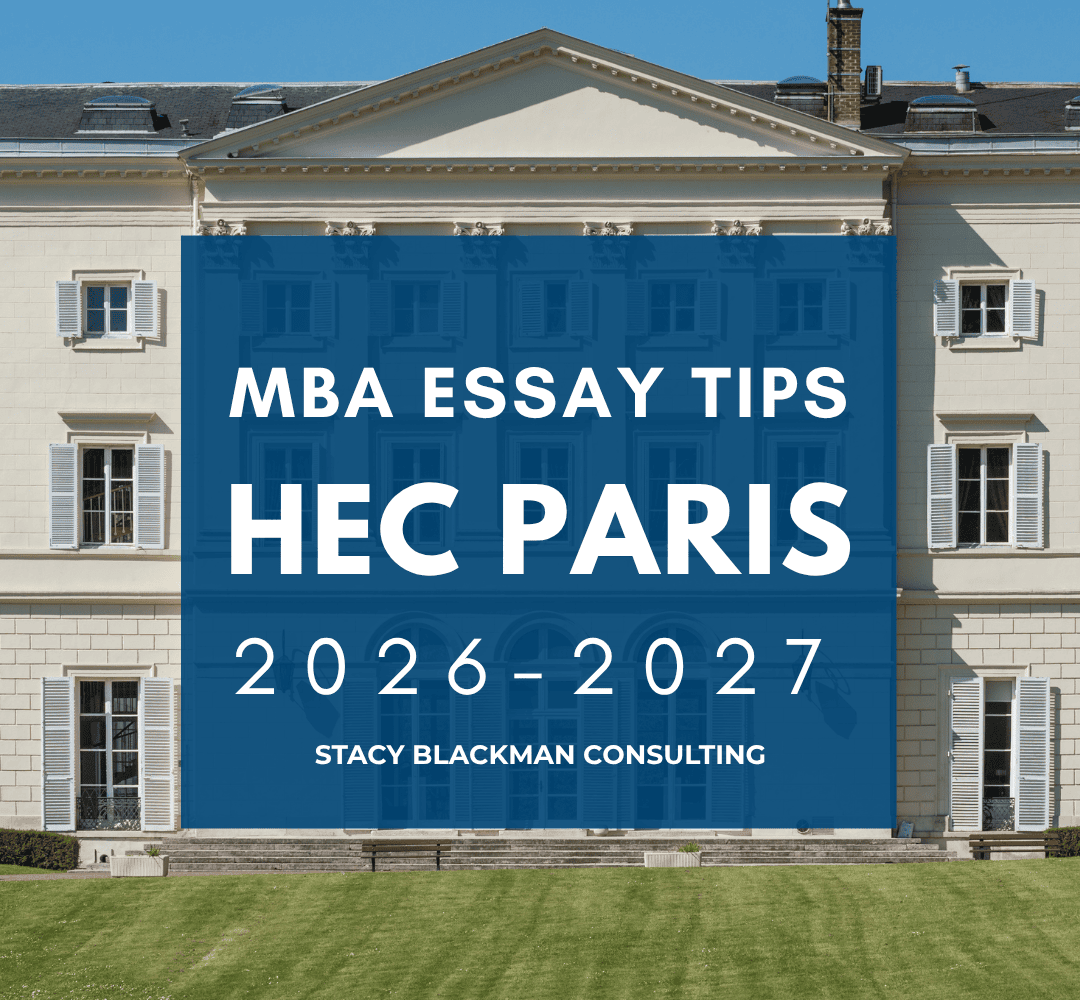
The HEC Paris essays include five required responses and one optional essay, each with a character limit. Together they test your career clarity, your proudest achievement, your ethical judgment, your imagination, and your cultural curiosity. Strong applicants treat the set as one portfolio, giving every essay a different story and a distinct side of their candidacy.
Quick Summary
- Map all six responses before you draft a word, so each essay carries its own story and shows a trait the others don’t.
- Give every HEC resource you mention a job in your career plan. The 16-month format, the Customized Phase, and access to Paris-based employers should each move you closer to your stated objective.
- Commit fully to the creative prompts. A vivid, opinionated answer to Essays 4 and 5 stays with the reader long after a cautious one has faded.
What does HEC Paris look for in its MBA essays?
HEC Paris consistently ranks among the world’s top MBA programs, and it’s known for its international diversity, entrepreneurial culture, and strong ties to employers in Paris and across Europe. The 16-month program runs longer than most European MBAs, which gives students extra time for internships and career exploration. That extra runway is especially valuable for career switchers.
Whether you’re already based in Europe or adding a global MBA to a U.S.-centric school list, HEC offers an international perspective and an alumni network of more than 70,000 graduates worldwide.
With six prompts, HEC asks for more writing than almost any other top program. The volume is deliberate. The admissions committee wants to see you from several angles, and each prompt targets a different quality. Essay 1 covers your goals and your fit with HEC. Essays 2 and 3 examine your track record and your integrity. Essays 4 and 5 show how you think once the conversation moves away from your career.
One practical note before you start: HEC sets character, not word, limits. So, the 2,000-character essays give you roughly 300 to 350 words, and the 3,500-character Essay 1 gives you about 550. Draft with a character counter open and paste your text into the application form early to confirm it fits.
Listen to our B-Schooled podcast on European MBA Programs to hear one of Stacy Blackman Consulting’s European MBA experts answer frequently asked questions about MBA programs outside of the U.S.
Applying to HEC Paris this season? Request a free consultation to get an SBC expert’s read on your candidacy.
How do you answer HEC Paris Essay 1 on your goals and why now?
Essay 1: Why are you applying to the HEC MBA Program now? What is the professional objective that will guide your career choice after your MBA, and how will the HEC MBA contribute to the achievement of this objective? (3,500 characters)
The first essay is the cornerstone of your HEC application. The committee is evaluating three things here. They want to know how clear your career goals are, whether the timing makes sense, and how well your plans match what HEC offers. The prompt asks all three questions directly, so answer each one in turn and give them roughly equal weight.
Notice that HEC asks for “the professional objective” in the singular. Name one target role and industry for the years right after graduation, then show where that path leads over the long term. A focused objective is far easier for the reader to believe and to remember.
Build your “why now” around the pivotal moments that shaped your ambitions. Think of the essay as a narrative arc that explains how your experience led to your objective and why this is the moment to make a change. Suppose you want to pivot from engineering into strategy consulting. You might describe how leading cross-border product launches showed you the thrill of high-level problem-solving while also revealing the limits of staying in a technical lane. If you work in finance and want to move into impact investing, connect a deal you worked on to your desire to pair financial acumen with social value.
Connecting your goals to HEC Paris
HEC’s resources should figure prominently in your answer. The 16-month format leaves room for an internship or a deep entrepreneurial project. The Customized Phase lets you build a specialization around your target field. And the campus sits a short trip from central Paris, home to luxury houses, financial institutions, and multinational headquarters. For each resource you name, explain what you’ll do with it and how it closes a gap between where you are today and where you plan to be.
The most compelling applicants present ambitions that feel both aspirational and achievable, and they make it obvious why HEC is the right launchpad.

What should you write about for your most significant life achievement?
Essay 2: What do you consider your most significant life achievement? (2,000 characters)
This essay reveals the kind of leader you’re becoming. HEC cares most about meaningful growth and lasting impact, so a quiet accomplishment with deep personal stakes can outperform a flashy headline. The wording matters too. HEC asks about your “life” achievement, which opens the door to examples from your professional life, a personal challenge, or a formative experience from earlier years. Your choice tells the committee what you value, so pick the achievement that means the most to you and be ready to explain why.
The STAR method gives you a reliable structure. Describe the Situation you faced, the Task in front of you, the Action you took, and the Result that followed. With only 2,000 characters, cover the situation and task in two or three sentences and spend most of your space on your actions and what came of them.
One applicant might recount turning around a failing client relationship by rebuilding trust, a story that shows persistence and emotional intelligence. Another might reflect on leading a grassroots nonprofit initiative that grew from a single fundraiser into a sustainable program. You could also highlight a deeply personal milestone, such as overcoming cultural barriers after moving abroad, or becoming the first in your family to graduate from college and then mentoring your siblings through the process.
Whatever example you choose, close with reflection. Tell the AdCom what the experience taught you about leadership, resilience, or working with others, and how it shaped the person you are today.
How do you handle the leadership and ethics essay?
Essay 3: Leadership and ethics are inevitably intertwined in the business world. Describe a situation in which you have dealt with these issues and how they have influenced you. (2,000 characters)
HEC asks this question to gauge your ethical compass. The committee wants to know whether you can be trusted to act with integrity when the choices get hard, and what lessons you carry forward from those moments. Business careers are full of situations where values clash with incentives. How you handled one of them says more about your leadership potential than any polished metric.
The best stories involve a decision that cost you something or put something at risk. Perhaps you discovered a senior colleague was cutting corners on compliance to hit a quarterly target. Speaking up put your own advancement on the line, while staying silent would have contradicted your values. Or maybe you led a project in an emerging market where accepted local practices clashed with your company’s ethical standards, forcing you to balance cultural sensitivity with firm principles. Some applicants draw on earlier experiences, such as a student leader who had to discipline a close friend, or a volunteer who confronted questions of fairness and inclusion.
The prompt has two parts, and applicants often shortchange the second. Describe the situation briefly, then devote at least a third of the essay to how it influenced you. Explain what you do differently as a leader today because of it. An imperfect resolution is fine. HEC will respect an honest account of a messy situation far more than a sanitized story where the right answer was obvious from the start.

How do you answer “Imagine a life entirely different from the one you now lead”?
Essay 4: Imagine a life entirely different from the one you now lead. What would it be? (2,000 characters)
This prompt may seem playful, but it’s carefully designed to test two qualities HEC values: creativity and self-awareness. Realism is beside the point. The committee wants to see how you think when asked to imagine something beyond your resume and goals. The contrast between your alternate life and your current one reveals what matters most to you.
Applicants often go wrong here by playing it too safe. Writing “If I weren’t in finance, I’d be in consulting” tells the reader almost nothing. The strongest answers lean into imagination and specificity. An investment banker might describe running a vineyard in Provence and draw parallels between cultivating grapes and cultivating teams. A software engineer could picture herself as a children’s author, showing that storytelling and mentorship sit at the heart of her character. Someone deeply embedded in corporate life might envision a career as a social activist, pointing to a commitment to justice and community.
Fill the alternate life with detail. Tell the reader where you wake up, what your work involves, and who surrounds you. Humor and playfulness work well when they come naturally. By the end, though, the essay should deliver a deeper truth about your values. An alternate life built around exploration tells HEC how much you prize curiosity and discovery. One built around creativity suggests you see leadership as much an art as a science.
Which HEC Paris Essay 5 option should you choose?
Essay 5: Please choose from one of the following essays (2,000 characters max.):
a) What monument or site would you advise a first-time visitor to your country or city to discover, and why?
b) Certain books, movies, or plays have had an international success that you believe undeserved. Choose an example and analyze it.
c) What figure do you most admire and why? You may choose from any field (arts, literature, politics, business, etc.)
HEC uses this open-ended question to assess your intellectual curiosity, cultural awareness, and leadership philosophy. The topic matters less than your critical thinking and the personal lens you apply. Choose the option where you hold the strongest opinion, and check that your answer adds something new to the picture you’ve painted in Essays 1 through 4. The strongest responses connect back to your worldview, your values, and the kind of leader you aim to be at HEC and beyond.
Option A: The monument or site
Option A suits applicants who can offer cultural context the committee rarely sees. A candidate from rural India could highlight a local temple that reflects community resilience, while someone from São Paulo might describe street art as a symbol of social activism. Skip the landmark every guidebook lists first unless you have a personal angle on it. A lesser-known site paired with a story about why it matters to you will teach the reader more about both the place and the applicant.
Option B: The undeserved success
Option B can be powerful if handled with care. Suppose you believe a blockbuster film glossed over cultural complexity. “I didn’t like it” won’t carry the essay. Analyze why the work fell short. Perhaps it perpetuated stereotypes, flattened nuance, or prized entertainment over truth. HEC’s prompt uses the word “analyze,” so build an argument with evidence. A well-reasoned critique shows that you think independently and are willing to challenge groupthink.
Option C: The figure you admire
Option C works best when you admire a figure whose story connects to your own leadership journey. A famous CEO or global icon is the default choice, and hundreds of other applicants will make it. Consider a lesser-known entrepreneur who persevered against the odds, a political leader who showed integrity in turbulent times, or someone from your own community who exemplifies courage and service. Spend about half the essay on the figure and half on what their example has changed in how you lead.
Should you write the HEC Paris optional essay?
Essay 6 (Optional): Is there any additional information you would like to share with us? (6,300 characters)
Despite the label, HEC’s optional essay is a worthwhile opportunity for the right applicant. Use it when you need to clarify something that could distract the reader, or when you can add a materially new facet of your candidacy that strengthens your fit with HEC. Restraint and relevance are the watchwords. The 6,300-character limit is a ceiling, and most effective optional essays use a fraction of it. This space shouldn’t become a second goals essay or a greatest-hits reel from your resume.
If you’re addressing a concern, such as a low test score, an academic wobble, an employment gap, or an atypical recommender, acknowledge it succinctly and spend most of your space on evidence of progress. For instance, you might note that your first-year GPA dipped because of family circumstances, then point to your professional track record and additional quantitative coursework as proof that the issue is behind you.
If you’re adding new insight, choose one theme and go deep. Strong uses include describing traction on a startup that already has paying customers, outlining a mentoring program you built for underrepresented colleagues, or sharing the cultural fluency you gained from launching a product in a new market. Anchor the story in specifics and close with why it matters for HEC and your goals.
A simple structure works well. Open with a one-line purpose statement, follow with concise paragraphs on actions and outcomes, and end with a sentence that ties everything to HEC’s culture and resources. If you have no concern to explain and no substantive new angle to add, skip this essay. Knowing when to stop also signals maturity.

How should you use AI in your HEC Paris MBA essays?
AI tools can help you prepare for the HEC Paris essays, and they’re most useful before and after the writing itself. Use them to brainstorm candidate stories for each prompt, to check whether two essays lean on the same example, or to trim a draft that runs 200 characters over the limit.
The writing should stay yours, and HEC’s prompts make that especially important. Essays 4 and 5 exist to show how your mind works. AI-generated answers to those questions tend toward the same safe choices and the same tidy conclusions, which defeats the purpose of prompts built to reward originality. The ethics essay depends on details only you know, including what was at stake, what you feared, and what you’d do differently today.
Keep the interview in mind, too. If HEC invites you to the next stage, your interviewers can ask you to expand on anything you’ve written. Stories you drafted yourself are easier to discuss. AI policies are evolving quickly across business schools, so review the instructions in HEC’s online application for current guidance before you submit.
Frequently Asked Questions About HEC Paris MBA Essays
Do all the HEC Paris essays need to connect to my career goals?
Essay 1 does that work for the whole application. HEC wrote the other prompts to meet the person behind the plan, and steering your alternate life or your favorite monument back toward consulting or finance wastes the opening. Let Essays 2 through 5 show your values, judgment, and curiosity, and trust the reader to see how those qualities support the goals you’ve already laid out.
Will admitting I handled an ethical dilemma imperfectly hurt my application?
A spotless story carries greater risk. When the right answer is obvious, and the applicant emerges as the hero, the essay tells HEC little about how you behave under pressure. Hesitation, a partial win, or a decision you’d make differently today all give you material for the second half of the prompt, which asks how the experience influenced you.
Will criticizing a popular book or film in Essay 5 make me seem negative?
HEC invites the critique, so a well-supported argument works in your favor. Trouble starts when the essay turns into a rant or a statement of taste. Ground your case in specific scenes, themes, or choices in the work, acknowledge why audiences responded to it, and then explain what they overlooked. That approach shows the balanced, independent thinking the prompt is designed to find.
How do I tell a complete story in only 2,000 characters?
Most applicants spend too long on the setup. Choose a single moment or decision as the center of the essay, give the background in two or three sentences, and move straight to what you did. Save your final lines for reflection, since that’s where HEC learns the most about you. If a draft runs long, cut adjectives and context before cutting your own actions.
Making the Most of Your HEC Paris Essays
Crafting compelling HEC Paris essays takes careful reflection and strategic positioning. Stacy Blackman Consulting has helped countless applicants gain admission to top European MBA programs, including HEC Paris. Whether you need guidance on articulating your goals, choosing the right life achievement to highlight, or tackling the creative prompts, our expert team can help you put forward your strongest application. Contact us today for a free 15-minute advising session to talk strategy with a Principal SBC consultant.
 MBA Launchpad
 MBA Launchpad
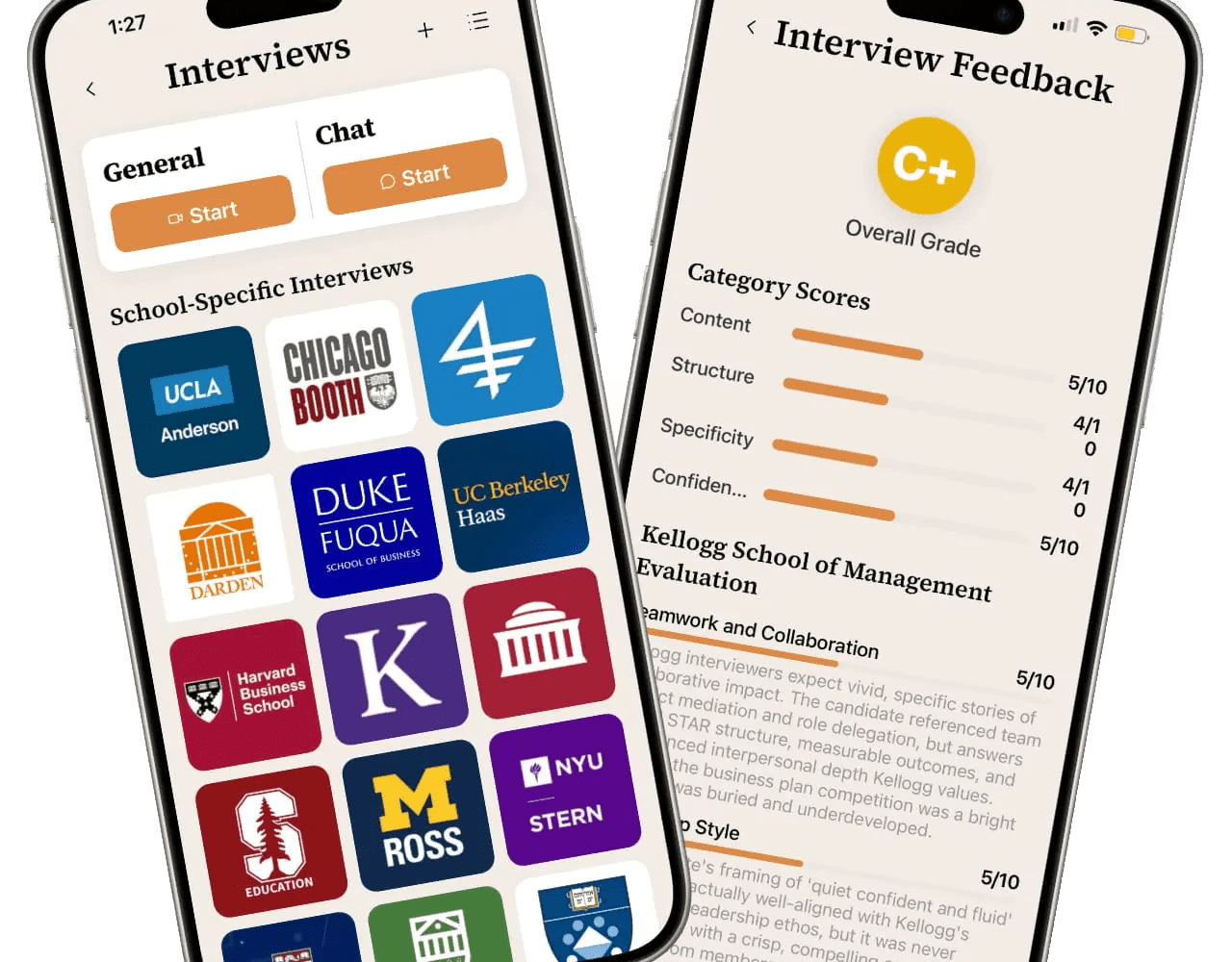
Don’t sleep on our latest product, MBA Launchpad by SBC! It’s an AI-powered admissions assistant built on 25+ years of SBC admissions data. Use it to assess your candidacy, shape your school list strategy, and get essay guidance 24/7. Premium features are currently free. Download it from the App Store or Google Play.
Here’s a snapshot of the caliber of expertise on our SBC team.














Ashley
Ashley is a former MBA Admissions Board Member for Harvard Business School (HBS), where she interviewed and evaluated thousands of business school applicants for over a six year tenure. Ashley holds an MBA from HBS. During her HBS years, Ashley was the Sports Editor for the Harbus and a member of the B-School Blades Ice Hockey Team. After HBS, she worked in Marketing at the Gillette Company on Male and Female shaving ...
×Pauline
A former associate director of admissions at Harvard Business School, Pauline served on the HBS MBA Admissions Board full-time for four years. She evaluated and interviewed HBS applicants, both on-campus and globally. Pauline's career has included sales and marketing management roles with Coca-Cola, Gillette, Procter & Gamble, and IBM. For over 10 years, Pauline has expertly guided MBA applicants, and her clients h ...
×Laura
Laura comes from the MBA Admissions Board at Harvard Business School (HBS) and is an HBS MBA alumnus. In her HBS Admissions role, she evaluated and interviewed hundreds of business school candidates, including internationals, women, military and other applicant pools, for five years. Prior to her time as a student at HBS, Laura began her career in advertising and marketing in Chicago at Leo Burnett where she worked on th ...
×Andrea
Andrea served as the Associate Director of MBA Admissions at Harvard Business School (HBS) for over five years. In this role, she provided strategic direction for student yield-management activities and also served as a full member of the admissions committee. In 2007, Andrea launched the new 2+2 Program at Harvard Business School – a program targeted at college junior applicants to Harvard Business School. Andrea has also served as a Career Coach for Harvard Business School for both cu ...
×Jennifer
Jennifer served as Admissions Officer at the Stanford (GSB) for five years. She holds an MBA from Stanford (GSB) and a B.S. in Chemical Engineering from University of Illinois Urbana-Champaign. Jennifer has over 15 years experience in guiding applicants through the increasingly competitive admissions process into top MBA programs. Having read thousands and thousands of essays and applications while at Stanford (GSB) Admiss ...
×Davina
Davina received her MBA from Stanford's Graduate School of Business (GSB), with a certificate in Public Management, and her BA in Psychology from UC Berkeley. Davina is an experienced strategic planning leader, facilitator, and business case writer who spent more than 15 years building culture, entrepreneurship, and leadership initiatives across Stanford University and the Stanford Graduate School of Business. She designed ...
×Erin
Erin served in key roles in MBA Admissions--as Director at Haas School of Business at UC Berkeley and Assistant Director at Stanford's Graduate School of Business (GSB). Erin served on the admissions committee at each school and has read thousands of applications in her career. At Haas, she served for seven years in roles that encompassed evaluation, outreach, and diversity and inclusion. During her tenure in Admissions at GSB, she was responsible for candidate evaluation, applicant outreach, ...
×Susie
Susie comes from the Admissions Office of the Stanford Graduate School of Business where she reviewed and evaluated hundreds of prospective students’ applications. She holds an MBA from Stanford’s GSB and a BA from Stanford in Economics. Prior to advising MBA applicants, Susie held a variety of roles over a 15-year period in capital markets, finance, and real estate, including as partner in one of the nation’s most innovative finance and real estate investment organizations. In that r ...
×Dione
Dione holds an MBA degree from Stanford Business School (GSB) and a BA degree from Stanford University, where she double majored in Economics and Communication with concentrations in journalism and sociology. Dione has served as an Admissions reader and member of the Minority Admissions Advisory Committee at Stanford. Dione is an accomplished and respected advocate and thought leader on education and diversity. She is ...
×Anthony
Anthony served as the Associate Director of MBA Admissions at the Wharton School at the University of Pennsylvania, where he dedicated over 10 years of expertise. During his time as a Wharton Admissions Officer, he read and reviewed thousands of applications and helped bring in a class of 800+ students a year. Anthony has traveled both domestically and internationally to recruit a ...
×Meghan
Meghan served as the Associate Director of Admissions and Marketing at the Wharton MBA’s Lauder Institute, a joint degree program combining the Wharton MBA with an MA in International Studies. In her role on the Wharton MBA admissions committee, Meghan advised domestic and international applicants; conducted interviews and information sessions domestically and overseas in Asia, Central and South America, and Europe; and evaluated applicants for admission to the program. Meghan also managed ...
×Amy
Amy comes from the Wharton School of the University of Pennsylvania where she was Associate Director. Amy devoted 12 years at the Wharton School, working closely with MBA students and supporting the admissions team. During her tenure at Wharton, Amy served as a trusted adviser to prospective applicants as well as admitted and matriculated students. She conducted admissions chats with applicants early in the admissions ...
×Ally
Ally brings six years of admissions experience to the SBC team, most recently as an Assistant Director of Admission for the full-time MBA program at Columbia Business School (CBS). During her time at Columbia, Ally was responsible for reviewing applications, planning recruitment events, and interviewing candidates for both the full-time MBA program and the Executive MBA program. She traveled both internationally and dome ...
×Emma
Emma comes from the MBA Admissions Office at Columbia Business School (CBS), where she was Associate Director. Emma conducted dozens of interviews each cycle for the MBA and EMBA programs, as well as coordinating the alumni ambassador interview program. She read and evaluated hundreds of applications each cycle, delivered information sessions to audiences across the globe, and advised countless waitlisted applicants. ×
Dana
Dana served as Assistant Director of Admissions at Columbia Business School for the Full-Time MBA program and has over 10 years of experience working in higher education. Known as a scrupulous file reader, Dana reviewed countless applications and assisted in rendering final decisions for the Admissions Committee at CBS. While leading information sessions at Columbia and on the road, Dana met and advised myriad applicants� ...
×Holly
Holly worked as a member of the NYU Stern MBA Admissions team for seven years and holds an MBA from NYU Stern. In her tenure as Director of NYU MBA Admissions, Holly worked closely with admissions teams from Columbia, Michigan Ross, UVA Darden, Cornell Johnson, Berkeley Haas, Yale SOM, and Duke Fuqua on recruiting events domestically and internationally. On the NYU Stern admissions committee, Holly conducted interviews, planned and hosted events, and trained staff on reading and interviewi ...
×Written by SBC Consultant Amy. Reviewed by Stacy Blackman. Learn more about our former admissions officers on the SBC admissions team page.