Expert Tips to Ace Your MIT Sloan MBA Interview
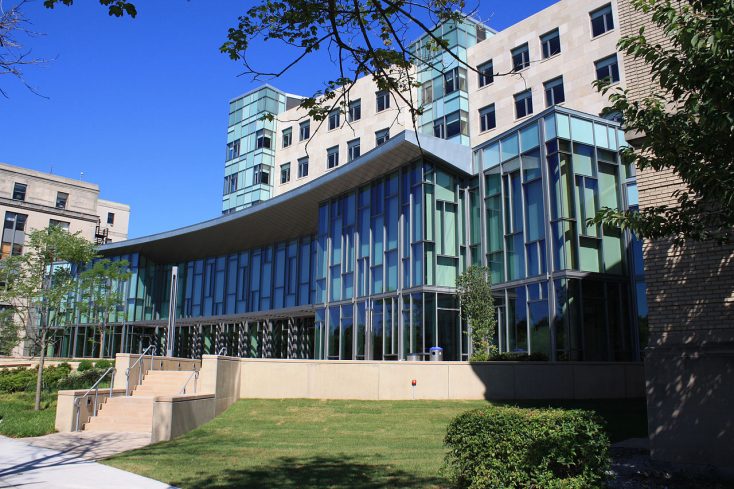
For many MBA hopefuls, the MIT Sloan School of Management represents the ultimate combination of intellectual rigor, innovation, and humility. Ranked #5 in the 2025 U.S. News & World Report MBA Rankings, Sloan remains one of the most selective business schools in the world. During the 2023–2024 admissions cycle, the school received 6,125 applications and admitted roughly 14% of candidates. Earning an MIT Sloan MBA interview invite means you’re already in elite company.
The admissions committee interviews about 30% of applicants, and roughly one in five of those ultimately receives an offer. The Sloan behavioral interview is your chance to show—not just tell—how you think, lead, and collaborate within MIT Sloan’s mission to develop principled, innovative leaders who improve the world and advance management practice.
How the MIT Sloan MBA Interview Works
Interviews are by invitation only and conducted by members of the Sloan admissions committee, not alumni or students. These AdCom professionals are trained in Sloan’s competency model, which evaluates candidates along two axes:
Demonstrated Success: tangible accomplishments and measurable results.
Personal Attributes: how you work in teams, solve problems, communicate, and adapt to change.
If invited, you’ll receive instructions to complete one short-answer question—typically focused on your professional or personal experiences—24 hours before your scheduled interview. The interview itself lasts about 30 minutes on Zoom, scheduled during Boston business hours.
“We’re looking to ask you a lot of specific behavioral-based questions to get more examples on your work success, your impact, and who you are as an individual,” says Alexis Marcus, Senior Associate Director of Admissions at MIT Sloan.
As Marcus shares in the video below, Sloan is probing not only what you achieved but how you achieved it—the decisions, interpersonal dynamics, and thought processes that shaped your results.
The Behavioral Focus—How Sloan Evaluates “How You Think”
The MIT Sloan MBA interview format is unapologetically behavioral. You won’t get brain teasers or quick-hit trivia about your resume. Instead, expect questions such as:
- “Tell me about a time you faced resistance while implementing an idea.”
- “Describe a moment when you had to make a tough decision with limited data.”
- “Share an example of a project that didn’t go as planned. What did you learn?”
“Your past experiences are some of the best indicators of future success,” revealed Dawna Levenson, Assistant Dean of Admissions. That’s why Sloan digs into moments when you’ve shown resilience, initiative, and emotional intelligence.
According to DeeDee, a former Sloan admissions officer and current SBC consultant, this emphasis stems from Sloan’s identity as a school of management, not business. “Business focuses on outcomes and profit,” she explains. “Management focuses on people and process. Sloan wants to understand how you lead and influence others—how you treat people and how you respond to uncertainty.”
B-Schooled Podcast Episode #94: A Deep Dive on Behavioral Interviews
The best responses demonstrate authenticity, reflection, and insight into your thinking. Highlight empathy, collaboration, and curiosity—traits that align with Sloan’s definition of effective leadership.

What the AdCom Is Listening For
Every interview helps the AdCom gather more data points on your demonstrated success and personal attributes. They’re listening for evidence of:
-
Impact: measurable influence on people, teams, or outcomes
-
Collaboration: ability to listen, empathize, and problem-solve
-
Adaptability: comfort navigating ambiguity and learning from mistakes
-
Communication: clarity, humility, and reflection under pressure
Expect probing follow-ups like “What were you thinking at that moment?” or “How did your team react?” The goal is to uncover how you reason and reflect—skills Sloan prizes as much as technical expertise.
“Our team is looking for reasons to admit you. Think of us as your advocates—we’re here to gather information and understand how you’ll contribute to the MIT Sloan community,” Marcus says.
Sloan interviewers are trained to follow up on every example you share. Don’t stop at the result—explain why you made each choice. Reflection shows maturity and self-awareness.
Build Your Story Bank for the Sloan Interview
Choose five to six stories from your professional or personal life that illustrate leadership, teamwork, and problem-solving. The STAR method, a boon for MBA essay writing, is your friend here:
-
Situation: Set the context
-
Task: Define your challenge or goal
-
Action: Describe your steps and decision process
-
Result: Share the outcome and what you learned
It’s crucial to bring fresh examples beyond what’s already been shared in your application, Marcus notes. Aim to demonstrate depth and reflection, and avoid canned answers. Instead, be conversational and thoughtful. “They want to know if you’re the kind of person others want to work with—likable, genuine, and intellectually engaged,” DeeDee says. “Show that you’re interested in learning, not performing.”

Prepare Thoughtful Questions
You’ll have a few minutes at the end to ask questions. Skip what’s obvious online; ask about Sloan’s action learning labs, innovation ecosystem, or approach to developing principled leaders. Genuine curiosity always stands out.
Finally, Sloan’s admissions team insists there’s no formula for success. “There’s absolutely no magic ticket,” Marcus notes. “We’re really excited to get to know you as an individual and understand how you’re going to contribute to MIT Sloan.”
Think of this as a conversation between you and your interviewer. The interview isn’t an interrogation—it’s confirmation. You’ve already impressed them on paper. Now show that your presence, self-awareness, and purpose align with Sloan’s collaborative, innovative culture.
“The AdCom wants more reasons to admit you,” DeeDee adds. “So go in ready to connect, reflect, and be yourself. That’s the Sloan way.”
Common Sloan Interview Mistakes to Avoid
- Over-polishing stories instead of sounding authentic.
- Repeating resume bullet points rather than expanding them.
- Forgetting to show curiosity—Sloan prizes thoughtful questions as much as thoughtful answers.
Ready to Perfect Your MIT Sloan Interview?
Stacy Blackman Consulting’s team includes former MIT Sloan admissions officers who know precisely how the AdCom evaluates candidates. Our All-In Interview Prep Package, Group Interview Prep, and 1:1 mock sessions will help you refine your stories, strengthen your delivery, and approach your Sloan behavioral interview with confidence.
Contact us today for a free 15-minute advising session with a Principal SBC consultant—and turn your MIT Sloan MBA interview into your moment to shine.
Here’s a snapshot of the caliber of expertise on our SBC team.








Ashley
Ashley is a former MBA Admissions Board Member for Harvard Business School (HBS), where she interviewed and evaluated thousands of business school applicants for over a six year tenure. Ashley holds an MBA from HBS. During her HBS years, Ashley was the Sports Editor for the Harbus and a member of the B-School Blades Ice Hockey Team. After HBS, she worked in Marketing at the Gillette Company on Male and Female shaving ...
×Pauline
A former associate director of admissions at Harvard Business School, Pauline served on the HBS MBA Admissions Board full-time for four years. She evaluated and interviewed HBS applicants, both on-campus and globally. Pauline's career has included sales and marketing management roles with Coca-Cola, Gillette, Procter & Gamble, and IBM. For over 10 years, Pauline has expertly guided MBA applicants, and her clients h ...
×Laura
Laura comes from the MBA Admissions Board at Harvard Business School (HBS) and is an HBS MBA alumnus. In her HBS Admissions role, she evaluated and interviewed hundreds of business school candidates, including internationals, women, military and other applicant pools, for five years. Prior to her time as a student at HBS, Laura began her career in advertising and marketing in Chicago at Leo Burnett where she worked on th ...
×Andrea
Andrea served as the Associate Director of MBA Admissions at Harvard Business School (HBS) for over five years. In this role, she provided strategic direction for student yield-management activities and also served as a full member of the admissions committee. In 2007, Andrea launched the new 2+2 Program at Harvard Business School – a program targeted at college junior applicants to Harvard Business School. Andrea has also served as a Career Coach for Harvard Business School for both cu ...
×Jennifer
Jennifer served as Admissions Officer at the Stanford (GSB) for five years. She holds an MBA from Stanford (GSB) and a B.S. in Chemical Engineering from University of Illinois Urbana-Champaign. Jennifer has over 15 years experience in guiding applicants through the increasingly competitive admissions process into top MBA programs. Having read thousands and thousands of essays and applications while at Stanford (GSB) Admiss ...
×Davina
Davina received her MBA from Stanford's Graduate School of Business (GSB), with a certificate in Public Management, and her BA in Psychology from UC Berkeley. Davina is an experienced strategic planning leader, facilitator, and business case writer who spent more than 15 years building culture, entrepreneurship, and leadership initiatives across Stanford University and the Stanford Graduate School of Business. She designed ...
×Erin K.
Erin served in key roles in MBA Admissions--as Director at Haas School of Business at UC Berkeley and Assistant Director at Stanford's Graduate School of Business (GSB). Erin served on the admissions committee at each school and has read thousands of applications in her career. At Haas, she served for seven years in roles that encompassed evaluation, outreach, and diversity and inclusion. During her tenure in Admissions at GSB, she was responsible for candidate evaluation, applicant outreach, ...
×Susie
Susie comes from the Admissions Office of the Stanford Graduate School of Business where she reviewed and evaluated hundreds of prospective students’ applications. She holds an MBA from Stanford’s GSB and a BA from Stanford in Economics. Prior to advising MBA applicants, Susie held a variety of roles over a 15-year period in capital markets, finance, and real estate, including as partner in one of the nation’s most innovative finance and real estate investment organizations. In that r ...
×Dione
Dione holds an MBA degree from Stanford Business School (GSB) and a BA degree from Stanford University, where she double majored in Economics and Communication with concentrations in journalism and sociology. Dione has served as an Admissions reader and member of the Minority Admissions Advisory Committee at Stanford. Dione is an accomplished and respected advocate and thought leader on education and diversity. She is ...
×Anthony
Anthony served as the Associate Director of MBA Admissions at the Wharton School at the University of Pennsylvania, where he dedicated over 10 years of expertise. During his time as a Wharton Admissions Officer, he read and reviewed thousands of applications and helped bring in a class of 800+ students a year. Anthony has traveled both domestically and internationally to recruit a ...
×Meghan
Meghan served as the Associate Director of Admissions and Marketing at the Wharton MBA’s Lauder Institute, a joint degree program combining the Wharton MBA with an MA in International Studies. In her role on the Wharton MBA admissions committee, Meghan advised domestic and international applicants; conducted interviews and information sessions domestically and overseas in Asia, Central and South America, and Europe; and evaluated applicants for admission to the program. Meghan also managed ...
×Amy
Amy comes from the Wharton School of the University of Pennsylvania where she was Associate Director. Amy devoted 12 years at the Wharton School, working closely with MBA students and supporting the admissions team. During her tenure at Wharton, Amy served as a trusted adviser to prospective applicants as well as admitted and matriculated students. She conducted admissions chats with applicants early in the admissions ...
×Ally
Ally brings six years of admissions experience to the SBC team, most recently as an Assistant Director of Admission for the full-time MBA program at Columbia Business School (CBS). During her time at Columbia, Ally was responsible for reviewing applications, planning recruitment events, and interviewing candidates for both the full-time MBA program and the Executive MBA program. She traveled both internationally and dome ...
×Emma
Emma comes from the MBA Admissions Office at Columbia Business School (CBS), where she was Associate Director. Emma conducted dozens of interviews each cycle for the MBA and EMBA programs, as well as coordinating the alumni ambassador interview program. She read and evaluated hundreds of applications each cycle, delivered information sessions to audiences across the globe, and advised countless waitlisted applicants. ×
Dana
Dana served as Assistant Director of Admissions at Columbia Business School for the Full-Time MBA program and has over 10 years of experience working in higher education. Known as a scrupulous file reader, Dana reviewed countless applications and assisted in rendering final decisions for the Admissions Committee at CBS. While leading information sessions at Columbia and on the road, Dana met and advised myriad applicants� ...
×Holly
Holly worked as a member of the NYU Stern MBA Admissions team for seven years and holds an MBA from NYU Stern. In her tenure as Director of NYU MBA Admissions, Holly worked closely with admissions teams from Columbia, Michigan Ross, UVA Darden, Cornell Johnson, Berkeley Haas, Yale SOM, and Duke Fuqua on recruiting events domestically and internationally. On the NYU Stern admissions committee, Holly conducted interviews, planned and hosted events, and trained staff on reading and interviewi ...
×


