MBA Reapplicant Strategy: How to Turn Rejection Into an Admit

A smart MBA reapplicant strategy can turn a rejection into an admit. Admissions committees actively look for growth, and returning with sharper goals, stronger materials, and a clear narrative of progress can be more compelling than any debut application. If you were denied in your last cycle, you are not starting over. You are starting ahead. Here is how to make that work for you.
- MBA reapplicants bring insight that first-timers lack: you know the process, the stakes, and where your last application fell short.
- AdComs at schools like HBS actively admit reapplicants. Approximately 10% of each HBS class are reapplicants.
- A successful reapplication means showing genuine growth, not recycling last year’s materials with a fresh coat of paint.
Do MBA reapplicants have an advantage over first-time applicants?
Rejection doesn’t mean you were unqualified. It means your application didn’t land. There’s a difference, and understanding it is where a strong reapplication begins.
You are not starting over. You know the stakes, you know the timeline, and you know where your last application fell short. That institutional knowledge is an asset most first-timers don’t have until it’s too late. You may have rushed your essays. Your goals may have been too broad. Your recommenders may not have hit the right notes. Whatever the gap, you now have a diagnosis. And that should shape every part of your reapplication strategy, not just your essays.
If you’re wondering how to improve on last year’s application, consider starting with SBC’s Ding Analysis to identify and strengthen key areas of growth.
At some of the world’s most competitive MBA programs, such as Harvard Business School, reapplicants make up a meaningful portion of the incoming class. HBS reports that approximately 10% of its admitted students each year are reapplicants. That strongly signals that top schools respect persistence and reward thoughtful improvement.
Many MBA reapplicants spend the intervening year improving their candidacy. Some take on more leadership at work or launch new community initiatives. Others use the time to clarify their goals and articulate a stronger connection to their target programs. Even small progress can signal significant growth, if you frame it thoughtfully.

What mistakes do first-time MBA applicants make that reapplicants can avoid?
Many first-time applicants underestimate how much the process demands. They may submit applications that are technically polished but emotionally flat, choosing recommenders based on title rather than genuine familiarity, or failing to connect their goals meaningfully to the specific programs they’re targeting. Some treat the MBA application like a strong job application: sharp resume, clean writing, done. That’s rarely enough at the top programs.
As a reapplicant, you’ve seen where that approach falls short. That experience sharpens everything from how you choose your recommenders to how specifically you write about your goals. For a full breakdown of where applications typically break down, see The Top MBA Rejection Reasons and How to Fix Them.
What should actually change in your MBA reapplication?
Admissions committees don’t expect a complete reinvention, but they do expect progress. Revisit every part of your materials with fresh eyes, and resist the urge to recycle. Even strong components from your last application should be rewritten, not just refined. AdComs are reading your full application again and will notice if you’ve hit copy and paste.
A few specifics worth addressing directly:
Goals. If your direction has shifted since the last cycle, explain why. A goal that has evolved with genuine reason is more compelling than one held rigidly in place.
Recommenders. If your recommenders last cycle weren’t the right fit, replace them. If they were strong, give them better context this time and more lead time to do it well.
Test scores. If your GMAT or GRE was below range and you didn’t address it, don’t leave it to chance again. SBC’s test prep team offers personalized coaching for reapplicants who need to move the needle.

How do you write the MBA reapplicant essay?
Many programs ask reapplicants to submit a dedicated essay or short addendum explaining what has changed since the last application. This is not a space to relitigate your rejection or express frustration. It is an opportunity to demonstrate exactly the kind of self-awareness and growth AdComs are hoping to see.
Start with a brief, honest acknowledgment that you took the rejection seriously and used it. You don’t need more than a sentence or two. AdComs aren’t looking for an apology or an explanation of why you deserved to get in. They want to see that you treated the outcome as information rather than injustice.
From there, get specific about what you actually did. Vague claims of growth won’t move the needle. “I took on more responsibility at work” is weak. “I was promoted to lead a team of six and managed our largest client relationship” is evidence. The more concrete the better, and the more directly it addresses a known weakness in your last application, the stronger it lands.
Close by reconnecting to the program with fresh specificity. If you visited campus, attended an admissions event, spoke with current students, or took a deeper look at the curriculum since your last application, say so. Generic program enthusiasm reads as generic. Demonstrating that your understanding of the school has deepened since your last application shows genuine continued interest, not just persistence.
Tone matters throughout. Bitterness, even subtle bitterness, will undermine an otherwise strong essay. Focus on forward momentum.
Frequently Asked Questions About MBA Reapplicant Strategy
Can you reapply to an MBA program that rejected you? Yes. Most top MBA programs explicitly welcome reapplicants, and many admit a meaningful number of them every cycle. There is typically no limit on how many times you can reapply, though you should wait at least one full cycle and have meaningful growth to show before doing so.
How long should you wait before reapplying to business school? Most programs and admissions consultants recommend waiting at least one full application cycle, roughly one year. This gives you time to identify weaknesses, strengthen your candidacy in concrete ways, and approach the materials with a fresh perspective rather than recycled content.
Do MBA programs know you are a reapplicant? Yes. Most programs track prior applications, and many ask directly in the application whether you have applied before. Owning the experience and demonstrating growth is a far stronger strategy than trying to obscure it.
What if my goals have changed since my last application? That is fine, and in some cases, it is a strength. A goal shift that reflects genuine professional learning is more compelling than one held rigidly in place. The key is to explain the evolution clearly and connect it credibly to your experience.
You already did the hard part once: you put yourself out there. Now it’s time to return sharper, stronger, and more ready than ever. When that admit call comes, it’ll be even sweeter the second time around.
Need help crafting an MBA reapplication strategy that reflects how far you’ve come? Our team of experts has helped hundreds of reapplicants turn setbacks into admits. Whether you need a fresh narrative, stronger goals, or strategic clarity, we can help you build a winning MBA reapplication. Schedule a free 15-minute consultation with a Principal SBC Consultant today.
Here’s a snapshot of the caliber of expertise on our SBC team.














Ashley
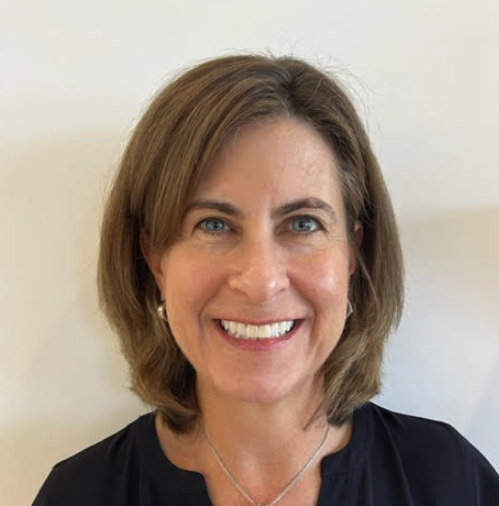
Ashley is a former MBA Admissions Board Member for Harvard Business School (HBS), where she interviewed and evaluated thousands of business school applicants for over a six year tenure. Ashley holds an MBA from HBS. During her HBS years, Ashley was the Sports Editor for the Harbus and a member of the B-School Blades Ice Hockey Team. After HBS, she worked in Marketing at the Gillette Company on Male and Female shaving ...
×Pauline
A former associate director of admissions at Harvard Business School, Pauline served on the HBS MBA Admissions Board full-time for four years. She evaluated and interviewed HBS applicants, both on-campus and globally. Pauline's career has included sales and marketing management roles with Coca-Cola, Gillette, Procter & Gamble, and IBM. For over 10 years, Pauline has expertly guided MBA applicants, and her clients h ...
×Laura
Laura comes from the MBA Admissions Board at Harvard Business School (HBS) and is an HBS MBA alumnus. In her HBS Admissions role, she evaluated and interviewed hundreds of business school candidates, including internationals, women, military and other applicant pools, for five years. Prior to her time as a student at HBS, Laura began her career in advertising and marketing in Chicago at Leo Burnett where she worked on th ...
×Andrea
Andrea served as the Associate Director of MBA Admissions at Harvard Business School (HBS) for over five years. In this role, she provided strategic direction for student yield-management activities and also served as a full member of the admissions committee. In 2007, Andrea launched the new 2+2 Program at Harvard Business School – a program targeted at college junior applicants to Harvard Business School. Andrea has also served as a Career Coach for Harvard Business School for both cu ...
×Jennifer
Jennifer served as Admissions Officer at the Stanford (GSB) for five years. She holds an MBA from Stanford (GSB) and a B.S. in Chemical Engineering from University of Illinois Urbana-Champaign. Jennifer has over 15 years experience in guiding applicants through the increasingly competitive admissions process into top MBA programs. Having read thousands and thousands of essays and applications while at Stanford (GSB) Admiss ...
×Davina
Davina received her MBA from Stanford's Graduate School of Business (GSB), with a certificate in Public Management, and her BA in Psychology from UC Berkeley. Davina is an experienced strategic planning leader, facilitator, and business case writer who spent more than 15 years building culture, entrepreneurship, and leadership initiatives across Stanford University and the Stanford Graduate School of Business. She designed ...
×Erin K.
Erin served in key roles in MBA Admissions--as Director at Haas School of Business at UC Berkeley and Assistant Director at Stanford's Graduate School of Business (GSB). Erin served on the admissions committee at each school and has read thousands of applications in her career. At Haas, she served for seven years in roles that encompassed evaluation, outreach, and diversity and inclusion. During her tenure in Admissions at GSB, she was responsible for candidate evaluation, applicant outreach, ...
×Susie
Susie comes from the Admissions Office of the Stanford Graduate School of Business where she reviewed and evaluated hundreds of prospective students’ applications. She holds an MBA from Stanford’s GSB and a BA from Stanford in Economics. Prior to advising MBA applicants, Susie held a variety of roles over a 15-year period in capital markets, finance, and real estate, including as partner in one of the nation’s most innovative finance and real estate investment organizations. In that r ...
×Dione
Dione holds an MBA degree from Stanford Business School (GSB) and a BA degree from Stanford University, where she double majored in Economics and Communication with concentrations in journalism and sociology. Dione has served as an Admissions reader and member of the Minority Admissions Advisory Committee at Stanford. Dione is an accomplished and respected advocate and thought leader on education and diversity. She is ...
×Anthony
Anthony served as the Associate Director of MBA Admissions at the Wharton School at the University of Pennsylvania, where he dedicated over 10 years of expertise. During his time as a Wharton Admissions Officer, he read and reviewed thousands of applications and helped bring in a class of 800+ students a year. Anthony has traveled both domestically and internationally to recruit a ...
×Meghan
Meghan served as the Associate Director of Admissions and Marketing at the Wharton MBA’s Lauder Institute, a joint degree program combining the Wharton MBA with an MA in International Studies. In her role on the Wharton MBA admissions committee, Meghan advised domestic and international applicants; conducted interviews and information sessions domestically and overseas in Asia, Central and South America, and Europe; and evaluated applicants for admission to the program. Meghan also managed ...
×Amy
Amy comes from the Wharton School of the University of Pennsylvania where she was Associate Director. Amy devoted 12 years at the Wharton School, working closely with MBA students and supporting the admissions team. During her tenure at Wharton, Amy served as a trusted adviser to prospective applicants as well as admitted and matriculated students. She conducted admissions chats with applicants early in the admissions ...
×Ally
Ally brings six years of admissions experience to the SBC team, most recently as an Assistant Director of Admission for the full-time MBA program at Columbia Business School (CBS). During her time at Columbia, Ally was responsible for reviewing applications, planning recruitment events, and interviewing candidates for both the full-time MBA program and the Executive MBA program. She traveled both internationally and dome ...
×Emma
Emma comes from the MBA Admissions Office at Columbia Business School (CBS), where she was Associate Director. Emma conducted dozens of interviews each cycle for the MBA and EMBA programs, as well as coordinating the alumni ambassador interview program. She read and evaluated hundreds of applications each cycle, delivered information sessions to audiences across the globe, and advised countless waitlisted applicants. ×
Dana
Dana served as Assistant Director of Admissions at Columbia Business School for the Full-Time MBA program and has over 10 years of experience working in higher education. Known as a scrupulous file reader, Dana reviewed countless applications and assisted in rendering final decisions for the Admissions Committee at CBS. While leading information sessions at Columbia and on the road, Dana met and advised myriad applicants� ...
×Holly
Holly worked as a member of the NYU Stern MBA Admissions team for seven years and holds an MBA from NYU Stern. In her tenure as Director of NYU MBA Admissions, Holly worked closely with admissions teams from Columbia, Michigan Ross, UVA Darden, Cornell Johnson, Berkeley Haas, Yale SOM, and Duke Fuqua on recruiting events domestically and internationally. On the NYU Stern admissions committee, Holly conducted interviews, planned and hosted events, and trained staff on reading and interviewi ...
×Written by Yvonne Milosevic, Content Strategist. Reviewed by Stacy Blackman, Founder, Stacy Blackman Consulting.