The Ultimate Guide to Writing Your MBA Personal Statement

The best MBA personal essays begin with asking “why”: Why business school, and why now?
When applicants hear the term MBA personal statement, many wonder if it’s the same thing as a personal essay for MBA admissions. In truth, schools often use the terms interchangeably. Both describe the part of the application where you reveal who you are beyond your scores, resume, and letters of recommendation.
This year, however, the landscape looks different. Many schools have trimmed their prompts, and admissions committees are openly grappling with the influence of AI. Harvard Business School has three shorter essays rather than that single open-ended question that reigned for a decade. What hasn’t changed? The fact that your personal essay helps the admissions committee decide whether your application adds up to a person they want in their MBA community.
Why the Personal Statement Essay Still Matters
Think about the reality of AdCom work: they read thousands of applications in a compressed timeframe. Many applicants look equally strong on paper. What differentiates the admit from the ding isn’t a slightly higher GMAT but an essay that shows self-awareness, purpose, and a distinctive perspective.
One former AdCom member on the SBC team still remembers an essay about an applicant who repaired bicycles with their grandfather—not because it was particularly dramatic, but because it captured values of resilience, curiosity, and family. That’s the power of a well-written personal essay for MBA admissions: it lingers in the reader’s mind.
And in an era of AI, the essay’s role has become even more critical. AdComs know polished phrasing can come from ChatGPT, but they’re looking for authenticity, which is something no algorithm can generate.

Avoid the Bland Middle
The most common essay weakness isn’t sloppy writing— it’s boring content. Too many essays are technically fine yet ultimately forgettable. They use the same safe language about leadership, impact, and career pivots that hundreds of other candidates lean on.
AdCom readers aren’t impressed by competency alone. They’re asking themselves: What makes this candidate different from the dozens of other consultants, bankers, or engineers in the pool?
The answer isn’t a longer list of accomplishments. It’s authenticity. An essay that shares why a setback mattered, how a personal experience shaped your worldview, or what motivates your goals tells the AdCom that you’ve done the kind of self-reflection that business school requires. That depth makes you memorable when the committee meets to debate admits.
Curious about your chances of getting into a top B-school? Contact us to talk strategy with a free 15-minute advising session with an SBC Principal Consultant.
The HBS and Stanford Approach
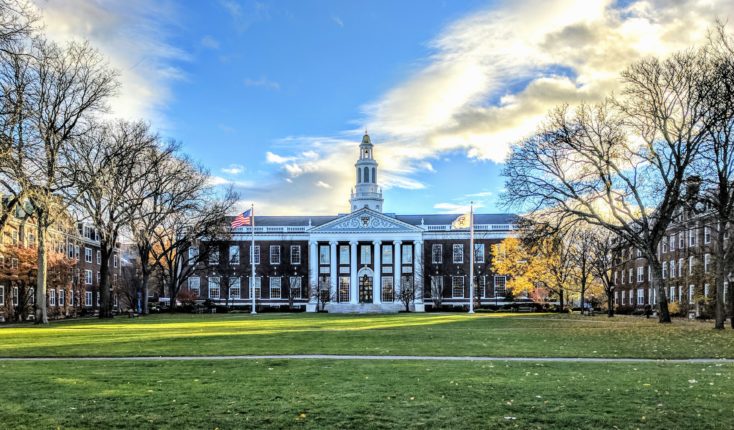
Now that Harvard Business School is two cycles removed from its famously open-ended essay, some applicants worry that this leaves less room for personal expression. However, the AdCom is still seeking the same thing: genuine insight into who you are. The tighter prompts force applicants to be more intentional about what to share.
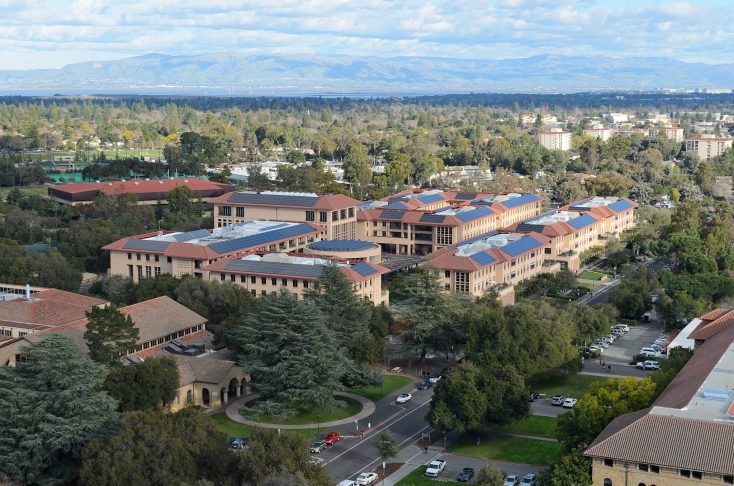
Meanwhile, at Stanford GSB, the legendary prompt “What matters most to you, and why?” continues to test applicants’ ability to be vulnerable and introspective. As one former GSB AdCom member on our team explains: “Stanford is looking for people who will make a big difference AND have a better shot than most at being able to execute. Stanford students tend to have an ‘X factor’—an unexpected trait, talent, or experience.”
Both schools illustrate the same truth: whether the essay is one question or several shorter ones, your task is to reveal who you are and why you matter.
How AI is Changing the MBA Personal Essay
This year, AI has become impossible to ignore. Harvard Business School and several other programs now require applicants to disclose if they’ve used AI in any capacity when formulating their essays.
At this year’s AIGAC conference, admissions representatives admitted they expect many applicants will lean on AI tools to some degree—and they don’t necessarily mind. What they do mind are mistakes that make reliance on AI obvious. Several members shared stories of essays referencing outdated courses, defunct clubs, or even professors who had passed away. Errors like these instantly flagged that an applicant hadn’t done the work themselves.
The consensus? AI is here to stay, much like the calculator transformed the way we learn math. Schools are even embracing it in the classroom. But in your personal essay, AI can’t replace authentic reflection. It’s your responsibility to ensure your voice comes through.
Pitfalls to Avoid
Every AdCom reader can point to essays that didn’t work because they gave the committee nothing distinctive to remember. The most common missteps include:
-
Boring themes: writing about leadership or impact in ways that feel generic.
-
Surface-level reflection: listing what happened without exploring why it mattered.
-
Over-engineering: essays so polished they read as insincere.
-
AI tells: outdated references or robotic phrasing that undermine credibility.
Each of these errors prevents the AdCom from answering the core question: What unique perspective will this applicant bring to our class?
What a Strong MBA Personal Essay Achieves
When an essay works, the AdCom reader can clearly articulate why the candidate belongs in the program. The essay has shown them:
-
Authenticity: This is a real person, not a curated persona.
-
Self-awareness: The candidate understands their strengths and areas for growth.
-
Distinctiveness: Their perspective isn’t interchangeable with dozens of others.
-
Community value: They will add something tangible to class discussions and school culture.
“The reader should leave thinking, ‘I want this person in the room when we’re debating cases,’” says one former HBS AdCom now on the SBC team. That’s the level of impact your personal essay should aim for.

No One’s Story Is Quite Like Yours
When evaluating your candidacy, admissions teams look for evidence in your MBA personal statement—that is, your personal essay for MBA admissions—that shows you have a unique perspective to bring to the classroom.
Remember, you are not just your resume. You are the turning points, the motivations, and the experiences that shaped you. If you can share those with honesty and clarity, you give the AdCom a reason to say, ‘This is someone who belongs in our class.‘
***
Need expert guidance on your MBA personal essay? Stacy Blackman Consulting offers tailored support—from targeted essay reviews to full application strategy. From our All-In Partnership to interview prep, essay editing, resume review, and much more, we’ve got you covered. Contact us today for a free 15-minute advising session to talk strategy with a Principal SBC consultant.
Here’s a snapshot of the caliber of expertise on our SBC team.







Ashley
Ashley is a former MBA Admissions Board Member for Harvard Business School (HBS), where she interviewed and evaluated thousands of business school applicants for over a six year tenure. Ashley holds an MBA from HBS. During her HBS years, Ashley was the Sports Editor for the Harbus and a member of the B-School Blades Ice Hockey Team. After HBS, she worked in Marketing at the Gillette Company on Male and Female shaving ...
×Pauline
A former associate director of admissions at Harvard Business School, Pauline served on the HBS MBA Admissions Board full-time for four years. She evaluated and interviewed HBS applicants, both on-campus and globally. Pauline's career has included sales and marketing management roles with Coca-Cola, Gillette, Procter & Gamble, and IBM. For over 10 years, Pauline has expertly guided MBA applicants, and her clients h ...
×Laura
Laura comes from the MBA Admissions Board at Harvard Business School (HBS) and is an HBS MBA alumnus. In her HBS Admissions role, she evaluated and interviewed hundreds of business school candidates, including internationals, women, military and other applicant pools, for five years. Prior to her time as a student at HBS, Laura began her career in advertising and marketing in Chicago at Leo Burnett where she worked on th ...
×Andrea
Andrea served as the Associate Director of MBA Admissions at Harvard Business School (HBS) for over five years. In this role, she provided strategic direction for student yield-management activities and also served as a full member of the admissions committee. In 2007, Andrea launched the new 2+2 Program at Harvard Business School – a program targeted at college junior applicants to Harvard Business School. Andrea has also served as a Career Coach for Harvard Business School for both cu ...
×Jennifer
Jennifer served as Admissions Officer at the Stanford (GSB) for five years. She holds an MBA from Stanford (GSB) and a B.S. in Chemical Engineering from University of Illinois Urbana-Champaign. Jennifer has over 15 years experience in guiding applicants through the increasingly competitive admissions process into top MBA programs. Having read thousands and thousands of essays and applications while at Stanford (GSB) Admiss ...
×Davina
Davina received her MBA from Stanford's Graduate School of Business (GSB), with a certificate in Public Management, and her BA in Psychology from UC Berkeley. Davina is an experienced strategic planning leader, facilitator, and business case writer who spent more than 15 years building culture, entrepreneurship, and leadership initiatives across Stanford University and the Stanford Graduate School of Business. She designed ...
×Erin
Erin served in key roles in MBA Admissions--as Director at Haas School of Business at UC Berkeley and Assistant Director at Stanford's Graduate School of Business (GSB). Erin served on the admissions committee at each school and has read thousands of applications in her career. At Haas, she served for seven years in roles that encompassed evaluation, outreach, and diversity and inclusion. During her tenure in Admissions at GSB, she was responsible for candidate evaluation, applicant outreach, ...
×Susie
Susie comes from the Admissions Office of the Stanford Graduate School of Business where she reviewed and evaluated hundreds of prospective students’ applications. She holds an MBA from Stanford’s GSB and a BA from Stanford in Economics. Prior to advising MBA applicants, Susie held a variety of roles over a 15-year period in capital markets, finance, and real estate, including as partner in one of the nation’s most innovative finance and real estate investment organizations. In that r ...
×Dione
Dione holds an MBA degree from Stanford Business School (GSB) and a BA degree from Stanford University, where she double majored in Economics and Communication with concentrations in journalism and sociology. Dione has served as an Admissions reader and member of the Minority Admissions Advisory Committee at Stanford. Dione is an accomplished and respected advocate and thought leader on education and diversity. She is ...
×Anthony
Anthony served as the Associate Director of MBA Admissions at the Wharton School at the University of Pennsylvania, where he dedicated over 10 years of expertise. During his time as a Wharton Admissions Officer, he read and reviewed thousands of applications and helped bring in a class of 800+ students a year. Anthony has traveled both domestically and internationally to recruit a ...
×Meghan
Meghan served as the Associate Director of Admissions and Marketing at the Wharton MBA’s Lauder Institute, a joint degree program combining the Wharton MBA with an MA in International Studies. In her role on the Wharton MBA admissions committee, Meghan advised domestic and international applicants; conducted interviews and information sessions domestically and overseas in Asia, Central and South America, and Europe; and evaluated applicants for admission to the program. Meghan also managed ...
×Amy
Amy comes from the Wharton School of the University of Pennsylvania where she was Associate Director. Amy devoted 12 years at the Wharton School, working closely with MBA students and supporting the admissions team. During her tenure at Wharton, Amy served as a trusted adviser to prospective applicants as well as admitted and matriculated students. She conducted admissions chats with applicants early in the admissions ...
×Ally
Ally brings six years of admissions experience to the SBC team, most recently as an Assistant Director of Admission for the full-time MBA program at Columbia Business School (CBS). During her time at Columbia, Ally was responsible for reviewing applications, planning recruitment events, and interviewing candidates for both the full-time MBA program and the Executive MBA program. She traveled both internationally and dome ...
×Emma
Emma comes from the MBA Admissions Office at Columbia Business School (CBS), where she was Associate Director. Emma conducted dozens of interviews each cycle for the MBA and EMBA programs, as well as coordinating the alumni ambassador interview program. She read and evaluated hundreds of applications each cycle, delivered information sessions to audiences across the globe, and advised countless waitlisted applicants. ×
Dana
Dana served as Assistant Director of Admissions at Columbia Business School for the Full-Time MBA program and has over 10 years of experience working in higher education. Known as a scrupulous file reader, Dana reviewed countless applications and assisted in rendering final decisions for the Admissions Committee at CBS. While leading information sessions at Columbia and on the road, Dana met and advised myriad applicants� ...
×Holly
Holly worked as a member of the NYU Stern MBA Admissions team for seven years and holds an MBA from NYU Stern. In her tenure as Director of NYU MBA Admissions, Holly worked closely with admissions teams from Columbia, Michigan Ross, UVA Darden, Cornell Johnson, Berkeley Haas, Yale SOM, and Duke Fuqua on recruiting events domestically and internationally. On the NYU Stern admissions committee, Holly conducted interviews, planned and hosted events, and trained staff on reading and interviewi ...
×