Discover the Best MBA Programs for Real Estate

Real estate today isn’t just about property and profit—it’s where climate policy, capital markets, and technology collide. Developers are racing to meet net-zero goals. Cities are rethinking infrastructure and density. PropTech startups are transforming how assets are financed, built, and managed. The next generation of real estate leaders needs to do more than understand valuations—they need to understand systems. And that’s precisely what MBA programs for real estate deliver.
Unlike specialized master’s degrees focused on property development or finance, an MBA builds strategic range and a broader perspective. You’ll learn to underwrite deals, raise capital, lead teams, influence policy, and navigate sustainability and tech disruption.
An MBA opens doors across investment, private equity, REIT management, consulting, and development leadership roles. It also gives you a network of alumni, investors, and classmates who will shape the built environment alongside you. This degree is for those who aim not just to work in real estate but to transform and lead the industry.
Top business schools are evolving fast to meet that demand, offering specialized real estate pathways that blend finance, innovation, and sustainability. Below, we explore the best MBA programs for real estate—both M7 and beyond—that are redefining how business education connects to the physical world.
Ready to build your future in real estate? Work with Stacy Blackman Consulting to craft a standout application for top MBA programs.
Top MBA Programs for Real Estate to Watch

Wharton: The Industry Powerhouse
At Wharton, real estate isn’t a niche—it’s an ecosystem. The Zell/Lurie Real Estate Center connects students directly with the developers, investors, and innovators shaping skylines around the world.
The program’s Career Mentor Program paired 85 alumni mentors with 122 student mentees this past year, ensuring that every MBA pursuing real estate had access to personalized industry guidance. Meanwhile, Wharton’s five active real estate clubs organized treks and networking events across major markets, giving students exposure to top firms and development projects.
Through the Ballard Executive Speaker Series, 14 senior executives from across commercial, residential, and investment sectors visited campus this year to discuss market trends and deal strategy. The Helfand/Bluhm Fellowships also provide grants to offset costs for students pursuing real estate internships or professional development.
Wharton’s model blends finance rigor with extraordinary access—creating a launchpad for MBAs who want to shape global markets, not just analyze them.
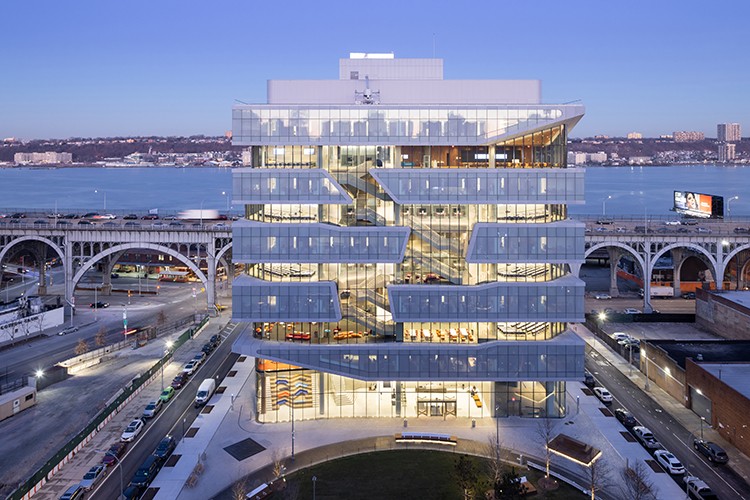
Columbia Business School: Real Estate at Street Level
If Wharton gives you the capital, Columbia gives you the context. With its Paul Milstein Center for Real Estate located in the heart of New York’s global capital markets, Columbia offers MBAs a front-row seat to the industry in motion.
The Milstein Center curates over 50 events annually, including Distinguished Speaker Lunches with C-suite executives and Lunch & Learn Panels that tackle topics such as affordable housing, debt markets, and AI’s impact on development. The Alumni Mentorship Program connects students with experienced professionals for individualized career guidance, while the annual Real Estate Career Forum brings top firms to campus for recruiting and knowledge exchange.
The Women in Real Estate Summit, co-hosted with Columbia’s MSRED program, showcases female leadership shaping the industry’s next chapter. Altogether, the Milstein Center’s ecosystem integrates research, community, and career growth—mirroring New York’s fast-paced, network-driven market.
Columbia’s approach suits MBAs who want to blend entrepreneurial drive with hands-on learning. In effect, “real estate education” isn’t just a classroom concept at CBS; it’s a citywide case study.
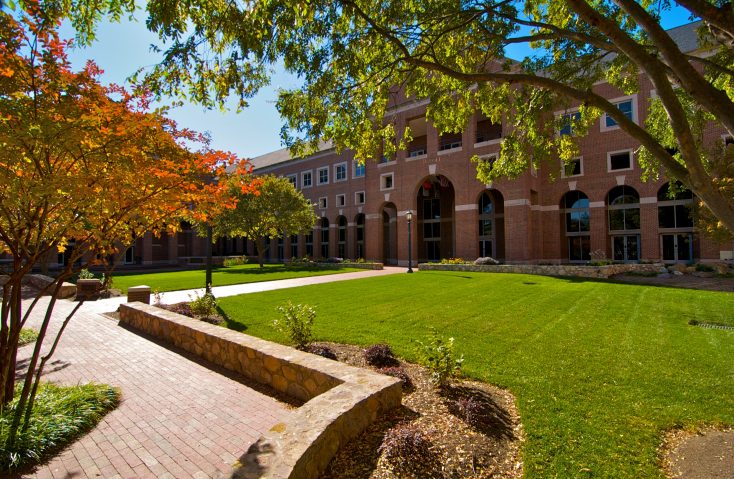
UNC Kenan-Flagler: The Development Leader
At UNC Kenan-Flagler, real estate isn’t just an elective track—it’s a defining strength. Anchored by the Leonard W. Wood Center for Real Estate Studies, the program delivers what it proudly calls a “Real World Real Estate” experience, combining rigorous classroom study with hands-on investment, development, and leadership opportunities.
About 10–12 percent of full-time MBAs pursue the real estate concentration each year, the highest among top schools. Students gain tangible experience through the student-managed Real Estate Private Equity Fund, where they evaluate live deals and pitch investments to professionals, and a capstone development course that simulates taking a project from concept to completion.
Outside the classroom, UNC’s ecosystem is unusually immersive. The school provides free access to the region’s premier UNC Real Estate Conference, which convenes alumni, faculty, and industry leaders to debate market trends. The MBA Real Estate Club organizes career treks to major cities, while the Executives-in-Residence Program gives students one-on-one mentorship from C-suite leaders in development, REITs, and asset management.
Students also gain a global perspective through a for-credit Global Immersion Elective that explores international real estate markets. Add in Argus certification, industry-association memberships, and funding for student projects, and Kenan-Flagler offers an unmatched mix of professional and academic exposure.
Networking isn’t an afterthought here—it’s the backbone of the experience. Regular speaker series, brown-bag lunches, and speed-networking events connect MBAs with one of the school’s most engaged alumni networks.
For those who want to lead at the intersection of development, investment, and community impact, Kenan-Flagler stands as one of the strongest MBA programs for real estate—and a worthy peer to the M7 giants.
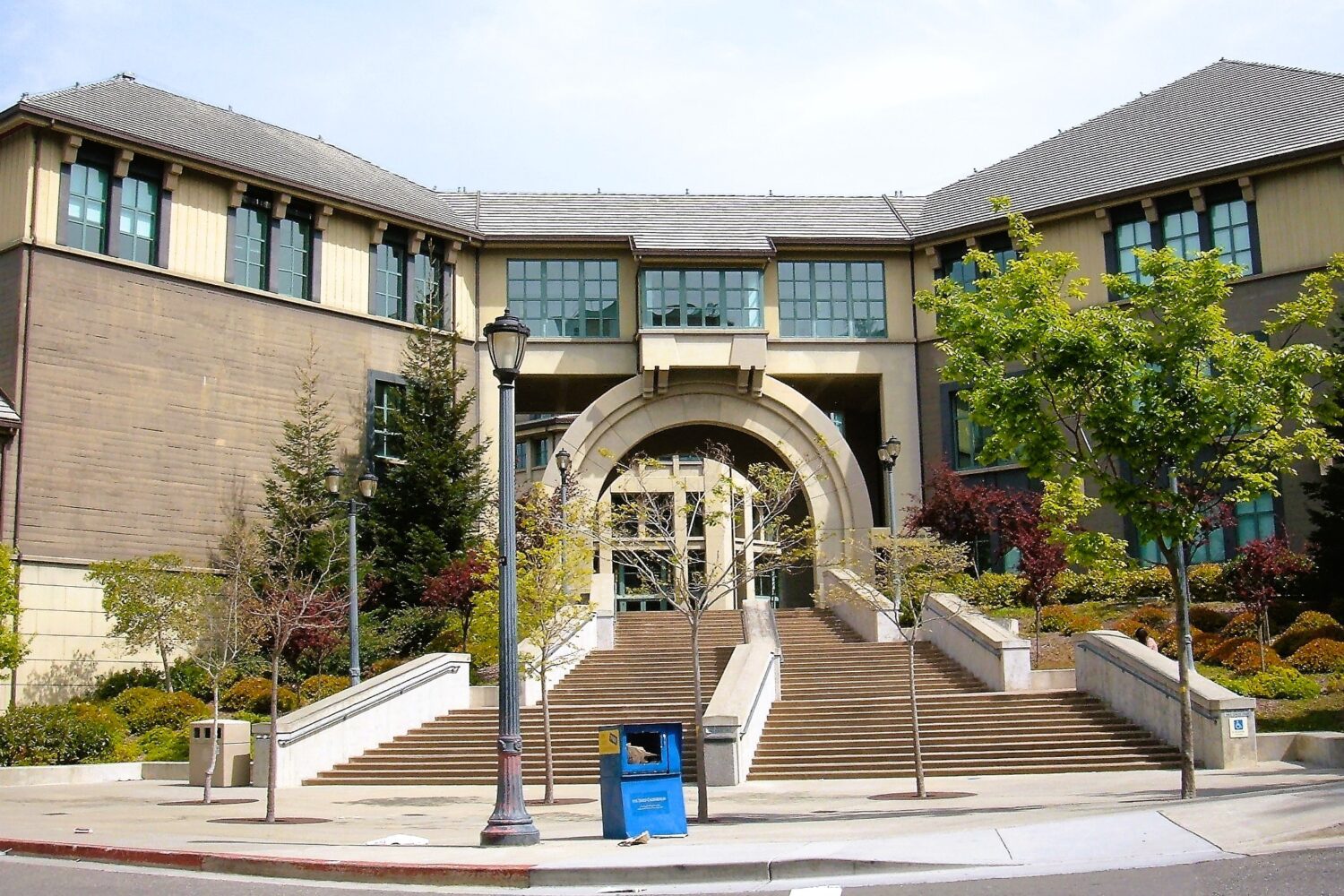
UC Berkeley Haas: The ESG and Innovation Pioneer
Real estate at Berkeley Haas blends business, policy, and sustainability like nowhere else. With its Fisher Center for Real Estate & Urban Economics, Haas stands at the crossroads of academic rigor and industry influence. The Center’s faculty includes some of the world’s most respected voices in real estate, finance, and urban economics, whose research on asset-backed securitization, real estate investment strategy, and housing policy regularly shapes industry debate.
Students pursuing real estate at Haas gain a rare balance of financial insight and social perspective. Coursework spans urban economics, sustainable development, and real estate capital markets. Further support comes from hands-on programs such as Accelerating Careers in Real Estate (ACRE), Executives in Residence, and Peer Mentoring and Advising initiatives.
Outside the classroom, the ecosystem thrives. The Berkeley Real Estate Club (BREC) drives community engagement through Networking Night and the Opportunities in Real Estate Forum, connecting MBAs with employers and alumni across development, investment, and ESG-focused organizations. Students also participate in case competitions, career chats, and alumni resume books designed to create visibility with leading firms.
Berkeley Haas is one of the few top programs rooted in both environmental design and economic policy. It attracts MBAs who want to redefine what “real estate leadership” means in a changing world—integrating sustainability, equity, and innovation into every deal and development.
From affordable-housing policy research to climate-resilient urban planning, Haas prepares MBAs not just to analyze markets but to transform them. For applicants looking to lead in the era of green investment and PropTech, the Fisher Center represents the future.

MIT Sloan: The Technologist’s Take on Real Estate
MIT Sloan approaches real estate through the lens of innovation, analytics, and design. While the MBA program doesn’t offer a formal real estate concentration, students gain rare access to the MIT Center for Real Estate (CRE)—a pioneering hub founded in 1983 that examines the global dynamics of real assets, housing policy, and sustainable urban systems.
Sloan MBAs can take select CRE courses or collaborate on research in areas such as PropTech, climate-resilient infrastructure, and real estate finance, all supported by MIT’s unmatched ecosystem of data science and engineering talent. The school’s culture of experimentation gives students the freedom to approach the built environment like a lab—testing how technology, policy, and market forces intersect to shape cities.
For applicants who want to merge business strategy with urban innovation, MIT Sloan offers something few schools can: a front-row seat to the future of real estate. Through its dual-degree program with the Department of Urban Studies and Planning, students can earn both an MBA and a master’s in city planning—an option designed for those who want to bridge the worlds of capital markets and civic design.
From smart cities to climate tech, Sloan prepares MBAs to think beyond traditional property roles. It’s an ideal fit for professionals who view real estate as a platform for systems innovation. Here, data, sustainability, and human-centered design intersect.

NYU Stern: The Global Real Estate Connector
NYU Stern’s real estate ecosystem reflects the pulse of its home city—fast-moving, globally connected, and financially sophisticated. At the heart of it all is the Chao-Hon Chen Institute for Global Real Estate Finance, a leader in research, teaching, and industry engagement that positions Stern among the world’s premier MBA programs for real estate.
Through faculty-led centers, applied research, and partnerships across the private and public sectors, the Chen Institute tackles challenges at the intersection of real estate finance, sustainability, technology, and global investment. The Institute is home to the Center for Real Estate Finance and spearheads major initiatives exploring innovation, climate resilience, and emerging-market development.
Stern offers one of the broadest and most forward-looking curricula in the field, combining finance, sustainability, operations, and data analytics. Students collaborate with renowned faculty whose research and policy work influence global real estate practice and regulation. Stern’s location in the heart of New York City gives MBAs premier access to top firms, investors, and policymakers.
Students network with industry leaders through the Chen Institute’s conferences, mentorship programs, and corporate partnerships, translating academic insight into immediate professional opportunity.
For applicants seeking a real estate MBA grounded in capital markets but attuned to global trends—from urbanization to climate tech—Stern delivers both the expertise and the network to compete at the highest level.
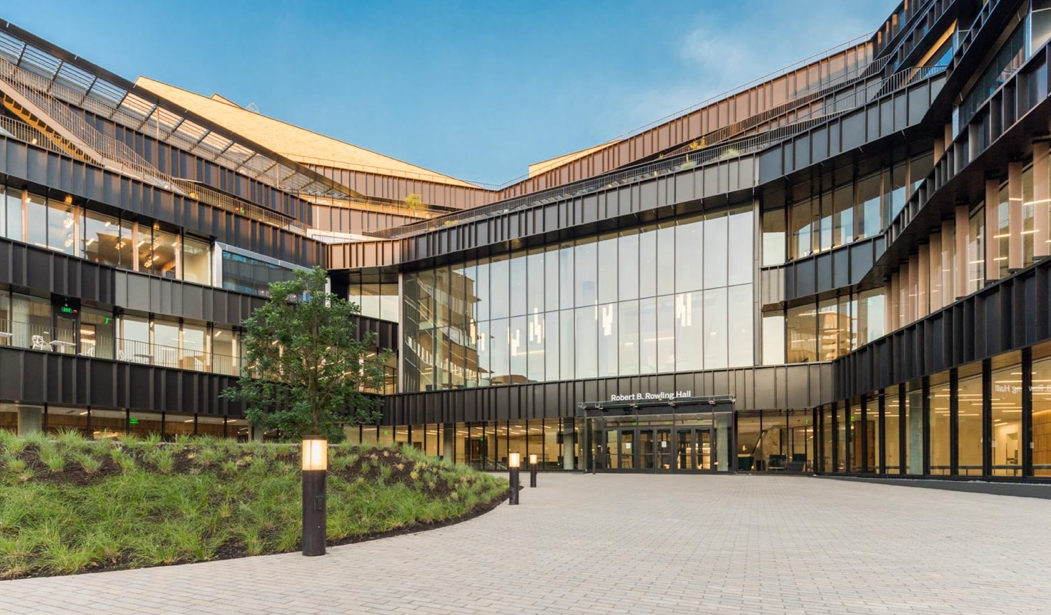
UT Austin McCombs: The Investor’s Playground
Everything’s bigger in Texas—including real estate opportunity. The Texas Real Estate Center at McCombs connects classroom learning with one of the most dynamic property markets in the U.S., blending finance, development, and design into a deeply practical MBA experience.
Students manage the John C. Goff Real Estate Investment Fund, gaining real-world experience analyzing and deploying capital through REIT and private equity deals. Held each November, the National Real Estate Challenge draws top MBA teams from across the U.S. and is judged by leading investment and development executives.
With an advisory council of 400 industry leaders and exclusive conferences on market trends, McCombs connects MBAs with real estate decision-makers. Graduates are prepared for roles in development, finance, asset management, and private equity, supported by a nationwide alumni network.
For applicants who want an MBA that turns analysis into action—and who aren’t afraid to think big—McCombs delivers one of the most applied, investor-ready MBA programs for real estate in the country.
Build Your Foundation for Impact
At SBC, we’ve helped many real estate professionals—developers, investors, analysts, and architects—turn their experience into strong MBA applications. Real estate applicants face a unique challenge. Their accomplishments are tangible, but leadership stories often get buried in deal details or financial modeling. That’s where we come in.
Our former AdCom insiders know how to frame your experience to highlight strategic vision, cross-disciplinary thinking, and measurable market impact. These are the qualities that top MBA programs for real estate value most.
Whether you’ve led zoning negotiations, sourced acquisitions, or modeled sustainability investments, we’ll help you explain the purpose behind your path. We’ll also show how an MBA strengthens your ability to shape the future of the built environment.
From essay strategy to recommender prep and interview coaching, we tailor every step to your real estate career goals. You deserve a team that understands how to construct success from the ground up. Contact us today to start crafting your blueprint for admission to the world’s best MBA programs for real estate.
Here’s a snapshot of the caliber of expertise on our SBC team.
















Ashley
Ashley is a former MBA Admissions Board Member for Harvard Business School (HBS), where she interviewed and evaluated thousands of business school applicants for over a six year tenure. Ashley holds an MBA from HBS. During her HBS years, Ashley was the Sports Editor for the Harbus and a member of the B-School Blades Ice Hockey Team. After HBS, she worked in Marketing at the Gillette Company on Male and Female shaving ...
×Pauline
A former associate director of admissions at Harvard Business School, Pauline served on the HBS MBA Admissions Board full-time for four years. She evaluated and interviewed HBS applicants, both on-campus and globally. Pauline's career has included sales and marketing management roles with Coca-Cola, Gillette, Procter & Gamble, and IBM. For over 10 years, Pauline has expertly guided MBA applicants, and her clients h ...
×Laura
Laura comes from the MBA Admissions Board at Harvard Business School (HBS) and is an HBS MBA alumnus. In her HBS Admissions role, she evaluated and interviewed hundreds of business school candidates, including internationals, women, military and other applicant pools, for five years. Prior to her time as a student at HBS, Laura began her career in advertising and marketing in Chicago at Leo Burnett where she worked on th ...
×Andrea
Andrea served as the Associate Director of MBA Admissions at Harvard Business School (HBS) for over five years. In this role, she provided strategic direction for student yield-management activities and also served as a full member of the admissions committee. In 2007, Andrea launched the new 2+2 Program at Harvard Business School – a program targeted at college junior applicants to Harvard Business School. Andrea has also served as a Career Coach for Harvard Business School for both cu ...
×Jennifer
Jennifer served as Admissions Officer at the Stanford (GSB) for five years. She holds an MBA from Stanford (GSB) and a B.S. in Chemical Engineering from University of Illinois Urbana-Champaign. Jennifer has over 15 years experience in guiding applicants through the increasingly competitive admissions process into top MBA programs. Having read thousands and thousands of essays and applications while at Stanford (GSB) Admiss ...
×Davina
Davina received her MBA from Stanford's Graduate School of Business (GSB), with a certificate in Public Management, and her BA in Psychology from UC Berkeley. Davina is an experienced strategic planning leader, facilitator, and business case writer who spent more than 15 years building culture, entrepreneurship, and leadership initiatives across Stanford University and the Stanford Graduate School of Business. She designed ...
×Erin K.
Erin served in key roles in MBA Admissions--as Director at Haas School of Business at UC Berkeley and Assistant Director at Stanford's Graduate School of Business (GSB). Erin served on the admissions committee at each school and has read thousands of applications in her career. At Haas, she served for seven years in roles that encompassed evaluation, outreach, and diversity and inclusion. During her tenure in Admissions at GSB, she was responsible for candidate evaluation, applicant outreach, ...
×Susie
Susie comes from the Admissions Office of the Stanford Graduate School of Business where she reviewed and evaluated hundreds of prospective students’ applications. She holds an MBA from Stanford’s GSB and a BA from Stanford in Economics. Prior to advising MBA applicants, Susie held a variety of roles over a 15-year period in capital markets, finance, and real estate, including as partner in one of the nation’s most innovative finance and real estate investment organizations. In that r ...
×Dione
Dione holds an MBA degree from Stanford Business School (GSB) and a BA degree from Stanford University, where she double majored in Economics and Communication with concentrations in journalism and sociology. Dione has served as an Admissions reader and member of the Minority Admissions Advisory Committee at Stanford. Dione is an accomplished and respected advocate and thought leader on education and diversity. She is ...
×Anthony
Anthony served as the Associate Director of MBA Admissions at the Wharton School at the University of Pennsylvania, where he dedicated over 10 years of expertise. During his time as a Wharton Admissions Officer, he read and reviewed thousands of applications and helped bring in a class of 800+ students a year. Anthony has traveled both domestically and internationally to recruit a ...
×Meghan
Meghan served as the Associate Director of Admissions and Marketing at the Wharton MBA’s Lauder Institute, a joint degree program combining the Wharton MBA with an MA in International Studies. In her role on the Wharton MBA admissions committee, Meghan advised domestic and international applicants; conducted interviews and information sessions domestically and overseas in Asia, Central and South America, and Europe; and evaluated applicants for admission to the program. Meghan also managed ...
×Amy
Amy comes from the Wharton School of the University of Pennsylvania where she was Associate Director. Amy devoted 12 years at the Wharton School, working closely with MBA students and supporting the admissions team. During her tenure at Wharton, Amy served as a trusted adviser to prospective applicants as well as admitted and matriculated students. She conducted admissions chats with applicants early in the admissions ...
×Ally
Ally brings six years of admissions experience to the SBC team, most recently as an Assistant Director of Admission for the full-time MBA program at Columbia Business School (CBS). During her time at Columbia, Ally was responsible for reviewing applications, planning recruitment events, and interviewing candidates for both the full-time MBA program and the Executive MBA program. She traveled both internationally and dome ...
×Emma
Emma comes from the MBA Admissions Office at Columbia Business School (CBS), where she was Associate Director. Emma conducted dozens of interviews each cycle for the MBA and EMBA programs, as well as coordinating the alumni ambassador interview program. She read and evaluated hundreds of applications each cycle, delivered information sessions to audiences across the globe, and advised countless waitlisted applicants. ×
Dana
Dana served as Assistant Director of Admissions at Columbia Business School for the Full-Time MBA program and has over 10 years of experience working in higher education. Known as a scrupulous file reader, Dana reviewed countless applications and assisted in rendering final decisions for the Admissions Committee at CBS. While leading information sessions at Columbia and on the road, Dana met and advised myriad applicants� ...
×Holly
Holly worked as a member of the NYU Stern MBA Admissions team for seven years and holds an MBA from NYU Stern. In her tenure as Director of NYU MBA Admissions, Holly worked closely with admissions teams from Columbia, Michigan Ross, UVA Darden, Cornell Johnson, Berkeley Haas, Yale SOM, and Duke Fuqua on recruiting events domestically and internationally. On the NYU Stern admissions committee, Holly conducted interviews, planned and hosted events, and trained staff on reading and interviewi ...
×