Why Right Now May Be the Best Time to Apply to a Deferred MBA Program

If you’re finishing your senior year of college and wondering whether to add a deferred MBA application to your already full plate, here’s the short answer: the case for applying has rarely been stronger than it is right now.
The job market that today’s graduates are stepping into is genuinely unsettled. Artificial intelligence is eliminating entry-level roles in some fields while creating entirely new ones in others. Economic volatility has made even well-established employers unpredictable.
Hiring freezes, layoffs, and industry-wide pivots that would have seemed unlikely a few years ago have become almost routine. None of that is meant to be alarmist. But it does reframe the question of whether to apply to a deferred MBA program from “should I bother?” to “why wouldn’t I?”
Deferred MBA programs allow college seniors to apply to a top business school during their final year, secure admission, and then spend two to five years in the workforce before enrolling. Programs at Harvard Business School, Stanford GSB, the Wharton School, Chicago Booth, MIT Sloan, Kellogg, UVA Darden, Columbia, and others have all been designed with exactly this candidate in mind. For a full breakdown of how these programs work and what each one looks for, see our overview of deferred MBA admissions programs.
Here are five reasons to take them seriously this cycle.
1. Uncertainty is precisely why this makes sense
Locking in a seat at a top business school doesn’t insulate you from economic turbulence or industry disruption. What it does is give you something increasingly rare: genuine optionality. Knowing that a world-class MBA program is waiting for you changes how you make professional decisions in the years before you enroll.
You can afford to join an early-stage company, take a risk on a non-traditional role, or explore an industry pivot, because you have a credential and a network secured as a foundation. In a volatile job market, that kind of bedrock is worth more than it might have seemed a few years ago.
2. You’re already in the right headspace to apply
Senior year is demanding, but it comes with a hidden advantage: you are still wired for academic rigor. Writing essays, preparing for standardized tests, meeting deadlines, asking for recommendations, all of it comes more naturally while you’re still embedded in an educational environment.
Once you enter the workforce full-time, that bandwidth compresses quickly. Applying now means tackling the hardest parts of the process while you’re still in the habit of doing hard things. Then you can spend your professional years building experience rather than squeezing in GMAT prep on weekends.
3. The financial barrier is low
Several leading deferred programs waive their application fees entirely. Chicago Booth waives its $250 fee for Scholars applicants. MIT Sloan’s MBA Early Admission application is free. HBS 2+2 also removes financial barriers for college seniors. When the cost of applying to a top-five business school is zero, the risk calculus shifts considerably.
A rejection from a deferred program typically doesn’t affect your chances if you apply again through the regular pool after gaining work experience. The downside is minimal. The upside is significant.

4. Admission means immediate access, not just a future promise
At most programs, a deferred offer isn’t simply a letter you file away. It’s an immediate entry point into the community. Admitted students gain access to alumni networks, are invited to events alongside current students and graduates, and can begin building relationships with people who may be directly relevant to their careers during the deferral period.
Considering that network access is one of the primary reasons people pursue an MBA in the first place, a two or three-year head start on cultivating those connections is a genuine competitive advantage.
5. You have more flexibility than you think
The deferral windows in most programs run two to five years, so you decide when the timing is right to enroll. You don’t need a fully formed 10-year plan to apply. What AdComs at these programs are looking for is evidence of self-awareness, leadership potential, and a genuine sense of direction.
Some deferred admits arrive at business school two years later in the same industry they started in. Others discover during the deferral period that they want to pivot entirely. Both outcomes are valid, and the programs are designed to accommodate either.
Is a deferred MBA program right for you?
Deferred programs are competitive, and they reward candidates who can demonstrate maturity and conviction alongside strong academics and leadership. They are not a side door or an easier route into elite MBA programs.
But if you have any interest in earning an MBA at a top program within the next five years, the argument for applying during your senior year is straightforward: the window is open, the cost is negligible, and locking in your future now leaves you free to make bolder decisions in the years ahead.
For a deeper look at what AdComs are actually evaluating in deferred candidates, see our guide to what college senior MBA applicants must demonstrate and our tips for acing your deferred MBA interview. When you’re ready to talk through your specific candidacy, reach out for a complimentary 15-minute advising session with an SBC Principal Consultant.
Here’s a snapshot of the caliber of expertise on our SBC team.
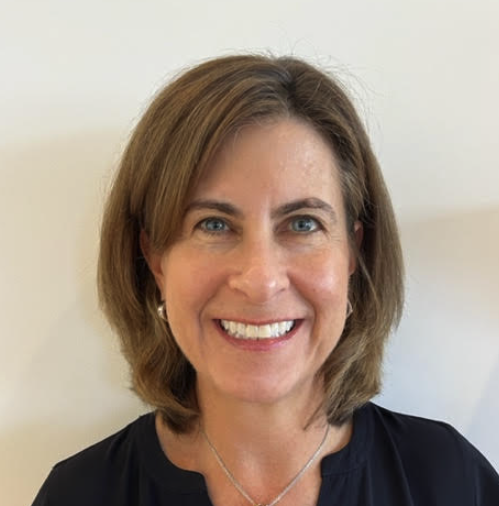














Ashley
Ashley is a former MBA Admissions Board Member for Harvard Business School (HBS), where she interviewed and evaluated thousands of business school applicants for over a six year tenure. Ashley holds an MBA from HBS. During her HBS years, Ashley was the Sports Editor for the Harbus and a member of the B-School Blades Ice Hockey Team. After HBS, she worked in Marketing at the Gillette Company on Male and Female shaving ...
×Pauline
A former associate director of admissions at Harvard Business School, Pauline served on the HBS MBA Admissions Board full-time for four years. She evaluated and interviewed HBS applicants, both on-campus and globally. Pauline's career has included sales and marketing management roles with Coca-Cola, Gillette, Procter & Gamble, and IBM. For over 10 years, Pauline has expertly guided MBA applicants, and her clients h ...
×Laura
Laura comes from the MBA Admissions Board at Harvard Business School (HBS) and is an HBS MBA alumnus. In her HBS Admissions role, she evaluated and interviewed hundreds of business school candidates, including internationals, women, military and other applicant pools, for five years. Prior to her time as a student at HBS, Laura began her career in advertising and marketing in Chicago at Leo Burnett where she worked on th ...
×Andrea
Andrea served as the Associate Director of MBA Admissions at Harvard Business School (HBS) for over five years. In this role, she provided strategic direction for student yield-management activities and also served as a full member of the admissions committee. In 2007, Andrea launched the new 2+2 Program at Harvard Business School – a program targeted at college junior applicants to Harvard Business School. Andrea has also served as a Career Coach for Harvard Business School for both cu ...
×Jennifer
Jennifer served as Admissions Officer at the Stanford (GSB) for five years. She holds an MBA from Stanford (GSB) and a B.S. in Chemical Engineering from University of Illinois Urbana-Champaign. Jennifer has over 15 years experience in guiding applicants through the increasingly competitive admissions process into top MBA programs. Having read thousands and thousands of essays and applications while at Stanford (GSB) Admiss ...
×Davina
Davina received her MBA from Stanford's Graduate School of Business (GSB), with a certificate in Public Management, and her BA in Psychology from UC Berkeley. Davina is an experienced strategic planning leader, facilitator, and business case writer who spent more than 15 years building culture, entrepreneurship, and leadership initiatives across Stanford University and the Stanford Graduate School of Business. She designed ...
×Erin
Erin served in key roles in MBA Admissions--as Director at Haas School of Business at UC Berkeley and Assistant Director at Stanford's Graduate School of Business (GSB). Erin served on the admissions committee at each school and has read thousands of applications in her career. At Haas, she served for seven years in roles that encompassed evaluation, outreach, and diversity and inclusion. During her tenure in Admissions at GSB, she was responsible for candidate evaluation, applicant outreach, ...
×Susie
Susie comes from the Admissions Office of the Stanford Graduate School of Business where she reviewed and evaluated hundreds of prospective students’ applications. She holds an MBA from Stanford’s GSB and a BA from Stanford in Economics. Prior to advising MBA applicants, Susie held a variety of roles over a 15-year period in capital markets, finance, and real estate, including as partner in one of the nation’s most innovative finance and real estate investment organizations. In that r ...
×Dione
Dione holds an MBA degree from Stanford Business School (GSB) and a BA degree from Stanford University, where she double majored in Economics and Communication with concentrations in journalism and sociology. Dione has served as an Admissions reader and member of the Minority Admissions Advisory Committee at Stanford. Dione is an accomplished and respected advocate and thought leader on education and diversity. She is ...
×Anthony
Anthony served as the Associate Director of MBA Admissions at the Wharton School at the University of Pennsylvania, where he dedicated over 10 years of expertise. During his time as a Wharton Admissions Officer, he read and reviewed thousands of applications and helped bring in a class of 800+ students a year. Anthony has traveled both domestically and internationally to recruit a ...
×Meghan
Meghan served as the Associate Director of Admissions and Marketing at the Wharton MBA’s Lauder Institute, a joint degree program combining the Wharton MBA with an MA in International Studies. In her role on the Wharton MBA admissions committee, Meghan advised domestic and international applicants; conducted interviews and information sessions domestically and overseas in Asia, Central and South America, and Europe; and evaluated applicants for admission to the program. Meghan also managed ...
×Amy
Amy comes from the Wharton School of the University of Pennsylvania where she was Associate Director. Amy devoted 12 years at the Wharton School, working closely with MBA students and supporting the admissions team. During her tenure at Wharton, Amy served as a trusted adviser to prospective applicants as well as admitted and matriculated students. She conducted admissions chats with applicants early in the admissions ...
×Ally
Ally brings six years of admissions experience to the SBC team, most recently as an Assistant Director of Admission for the full-time MBA program at Columbia Business School (CBS). During her time at Columbia, Ally was responsible for reviewing applications, planning recruitment events, and interviewing candidates for both the full-time MBA program and the Executive MBA program. She traveled both internationally and dome ...
×Emma
Emma comes from the MBA Admissions Office at Columbia Business School (CBS), where she was Associate Director. Emma conducted dozens of interviews each cycle for the MBA and EMBA programs, as well as coordinating the alumni ambassador interview program. She read and evaluated hundreds of applications each cycle, delivered information sessions to audiences across the globe, and advised countless waitlisted applicants. ×
Dana
Dana served as Assistant Director of Admissions at Columbia Business School for the Full-Time MBA program and has over 10 years of experience working in higher education. Known as a scrupulous file reader, Dana reviewed countless applications and assisted in rendering final decisions for the Admissions Committee at CBS. While leading information sessions at Columbia and on the road, Dana met and advised myriad applicants� ...
×Holly
Holly worked as a member of the NYU Stern MBA Admissions team for seven years and holds an MBA from NYU Stern. In her tenure as Director of NYU MBA Admissions, Holly worked closely with admissions teams from Columbia, Michigan Ross, UVA Darden, Cornell Johnson, Berkeley Haas, Yale SOM, and Duke Fuqua on recruiting events domestically and internationally. On the NYU Stern admissions committee, Holly conducted interviews, planned and hosted events, and trained staff on reading and interviewi ...
×