Focus on Fit to Find the Right MBA Program

Chasing prestige is easy. Finding the business school where you belong takes work. When you focus on fit over ranking and brand, you choose an MBA program that matches your goals, values, and learning style. That match shapes how much you grow as a leader, the network you build, and the opportunities you find after graduation.
Quick Summary
- Rankings measure a school’s reputation. Your MBA program fit determines how well you’ll perform, connect, and recruit once you’re there.
- Evaluate every school on the three C’s: curriculum, communication, and culture.
- Fit research pays off twice. It builds a stronger school list and gives you concrete material for your essays and interviews.
Rankings tell you how the market views a school. They can’t tell you whether you’ll speak up in its classrooms, click with its students, or land the job you want through its recruiting pipeline. Two programs that sit side by side on a ranking list can offer very different daily experiences.
To get started, consider the three C’s: curriculum, communication, and culture. The curriculum should align with your career goals. The school’s communication should be engaging and informative. The culture should match your personality and values.
“Applicants often underestimate culture,” says Stacy Blackman. “But choosing a school that feels like home will set you up for success both inside and outside the classroom.”
If you’re still in the research phase, keeping these three qualities in mind will make it easier to identify programs that suit your goals and personality. You’ll end up with a stronger school list and more confidence as you move through the MBA application process. If you’re deciding between two or more admission offers, we’ve included a section on that choice below.
Curious about your chances of getting into a top B-school? Schedule a free 15-minute chat with an SBC Principal Consultant.
Is the Curriculum a Good Fit for Your Goals?
All general management programs teach the fundamentals of core management skills. The next step in determining fit involves assessing how well each program aligns with your post-MBA career goals.
Academic strengths and specializations
Top business schools often have strengths in specific fields, including finance, entrepreneurship, marketing, healthcare, and real estate development. Many programs now also offer AI-focused courses and concentrations. Most top MBA programs have a STEM designation, which appeals to students who want to blend technology with management.
Start by narrowing your list based on how well each program can prepare you for your chosen industry. If you have laser-focused career goals, consider business schools that offer a concentration in your area of interest.
Flexibility versus structure
Programs differ in how much of your first year they decide for you. Some require a fixed core that every student takes together, which builds a shared foundation and tight bonds within your section. Others let you choose courses from the first term. Chicago Booth’s flexible curriculum is a well-known example of the second approach.
Career switchers often benefit from a structured core that quickly fills knowledge gaps. If you already have a strong business foundation, a flexible program lets you skip the basics and go deeper into electives sooner.
Teaching method
How a school teaches matters as much as what it teaches. Harvard Business School and UVA Darden are known for the case method, where class discussion drives the learning and participation counts heavily toward your grade. Other programs lean on a mix of lectures, team projects, and experiential learning such as consulting engagements with companies.
Think about how you learn best. If you thrive in debate and can think on your feet, a case-heavy program will energize you. If you prefer to absorb a framework before applying it, look for a more blended approach.
How to research the curriculum
- Read the course catalog, paying close attention to second-year electives in your field.
- Look up the faculty and research centers tied to your target industry.
- Review each school’s employment report to see which companies and functions hire its graduates.
- Check for experiential options such as labs, practicums, and global programs.
- Ask students in your target career path which courses and clubs helped them most.
B-Schooled Podcast: School Selection Considerations *Beyond* the Rankings
What Does a School’s Communication Tell You When You Focus on Fit?
How a program communicates with prospective students previews how it treats enrolled students. Consider whether the admissions team seems interested in getting to know applicants. A great way to gauge this is to see how often, and how deeply, the admissions committee engages.

Admissions blogs and content
Some of the most active school-sponsored admissions blogs include those from Tuck School of Business, Yale School of Management, UVA Darden School of Business, Chicago Booth School of Business, and the Harvard MBA Voices blog.
These resources typically share application tips, student profiles, school events, and other insights. That level of attention to engaging potential students speaks volumes about the experience MBA students can expect once they’re on campus.
Pay attention to tone as well as frequency. A school that explains its process in plain language and tells applicants what it’s looking for is showing you its values. You’ll also pick up the vocabulary the school uses to describe itself, which helps when you write your essays.
Events and direct contact
Blogs are only one channel. You can learn a lot from how a school shows up in person and online.
- Attend an information session or webinar and notice whether the presenters answer questions candidly.
- Sign up for a coffee chat or a student ambassador conversation if the school offers them.
- Email a club leader in your area of interest and see how quickly, and how warmly, they respond.
- Notice whether students and alumni speak about the school with specifics or with talking points.
A responsive, generous community during the application stage usually stays that way. Alumni who return a stranger’s email are the same alumni who’ll take your call during a job search.
Is the Culture a Good Fit for Your Personality?
As Stacy Blackman urges applicants, don’t underestimate the importance of culture. It’s often the hidden factor that determines how meaningful and fulfilling your MBA experience will be. Understanding a school’s culture will help you decide whether the program suits your personality.
Competitive or collaborative
Start by determining whether the culture is predominantly competitive or collaborative. Most schools describe themselves as collaborative, so look for evidence. Grading policies, grade non-disclosure norms, and how students prepare one another for recruiting all tell you how classmates treat each other when the stakes are high.
Size and location
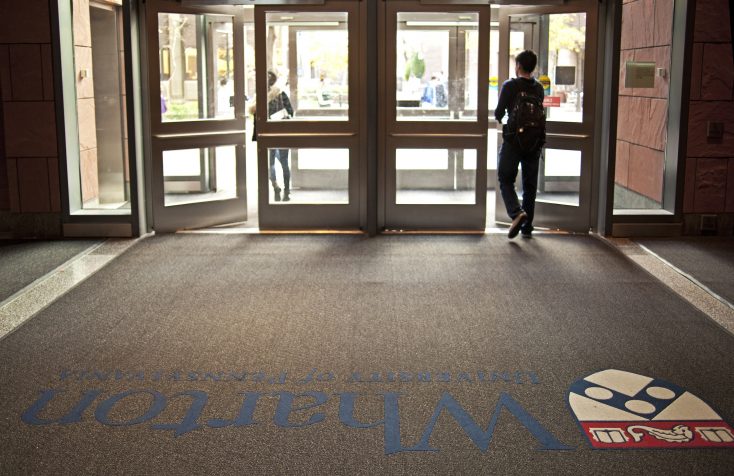
Size and location often matter. Larger programs in urban centers, such as Harvard, Wharton, and Columbia, typically feel more competitive and intense. Students there also have major-city employers, internships, and a social life at their doorstep, which can spread the community out.
Smaller business schools in rural settings, such as Dartmouth’s Tuck School, typically foster a close-knit atmosphere. Many students live on or near campus and socialize with classmates and faculty regularly. MBA programs with smaller cohorts take pride in their down-to-earth, collaborative cultures.
Social life and community
Look at how students spend their time outside class. Some programs revolve around clubs, treks, and a packed social calendar. Others draw students with families or outside commitments who want a quieter rhythm. If you have a partner or children, ask how the school includes them.
Questions to ask current students
- What surprised you most about the culture after you arrived?
- How do classmates help each other during recruiting season?
- What kind of person tends to struggle here?
- Where do students live, and how much of social life happens on campus?
- What would you change about the program?
You’re trying to determine whether you can flourish professionally, academically, socially, and mentally in each program. There’s no right or wrong school culture. It’s simply a matter of choosing the environment that’s best for you.
How Do You Choose Between MBA Admission Offers?
Holding two or more offers is a great problem to have, and the three C’s still apply. At this stage, you have far better access to each school, so use it.
- Attend admitted students events. A weekend with your future classmates is the best culture test available.
- Sit in on a class if you haven’t already, and picture yourself in that room for two years.
- Compare employment reports for your specific industry and function instead of looking at overall placement numbers.
- Ask each school to connect you with alumni who work in your target role.
- Weigh scholarship money against the outcomes you expect from each program.
When the offers are close, pay attention to where you felt most like yourself. The ranking gap between two top programs matters far less over a career than the relationships and confidence you build at the school that suits you.
How Can You Find Your MBA Program Fit?
- Reflect on your learning style and career goals. Write down what you need from a program before you look at any school’s marketing.
- Talk with current students and alumni. Aim for several conversations per school so one person’s experience doesn’t skew your view.
- Visit campuses or attend virtual sessions. Seeing a class in action tells you more than any brochure.
- Keep notes as you go. Names, courses, and moments that stood out will be valuable when you write your essays.
- Trust your gut. Fit is personal as well as logical.
Choosing where to pursue an MBA is a huge decision. Focusing on fit will help you choose a program that supports your growth long after graduation. Do your homework, weigh each program’s strengths and culture, and choose the environment where you can thrive.
Once you’ve identified the programs that feel like the right fit, the next step is learning how to communicate that fit in your applications. For a deeper dive into how to connect your story with a school’s values, check out our companion post: Find the Right MBA Fit for You.
Frequently Asked Questions About MBA Program Fit
Will choosing fit over ranking hurt my career prospects?
Recruiters hire individuals, and engaged, well-supported students tend to interview better, lead more, and build stronger networks. A slightly lower-ranked program with deep ties to your target industry can outperform a bigger name that sends few graduates into your field. Check each school’s employment report for your specific goal before assuming the higher rank wins.
Every school says it’s collaborative. How can I tell which ones mean it?
Look past the adjectives to the policies and habits. Ask how grading works, whether second-years coach first-years through recruiting, and how students share interview prep. Then ask three or four students the same question and compare their answers. Consistent, specific stories are a reliable sign.
What if I can’t visit campus?
Plenty of admitted students never set foot on campus before applying. Virtual information sessions, online class visits, calls with student ambassadors, and local alumni events can give you a clear picture. One-on-one conversations matter most, so prioritize those over polished webinars.
Should I apply to a school that fits me if my stats fall below its averages?
A strong case for fit can help the admissions committee see why you belong, though it won’t erase a large gap in your numbers. Build a balanced list that includes reach, target, and likelier schools, and make sure every one of them is a place you’d be happy to attend.
Stacy Blackman Consulting offers a range of services to meet your MBA application needs, from our comprehensive All-In Partnership to individualized hourly help with reviewing your MBA resume. Contact us today for a free 15-minute advising session to talk strategy with a Principal SBC consultant.
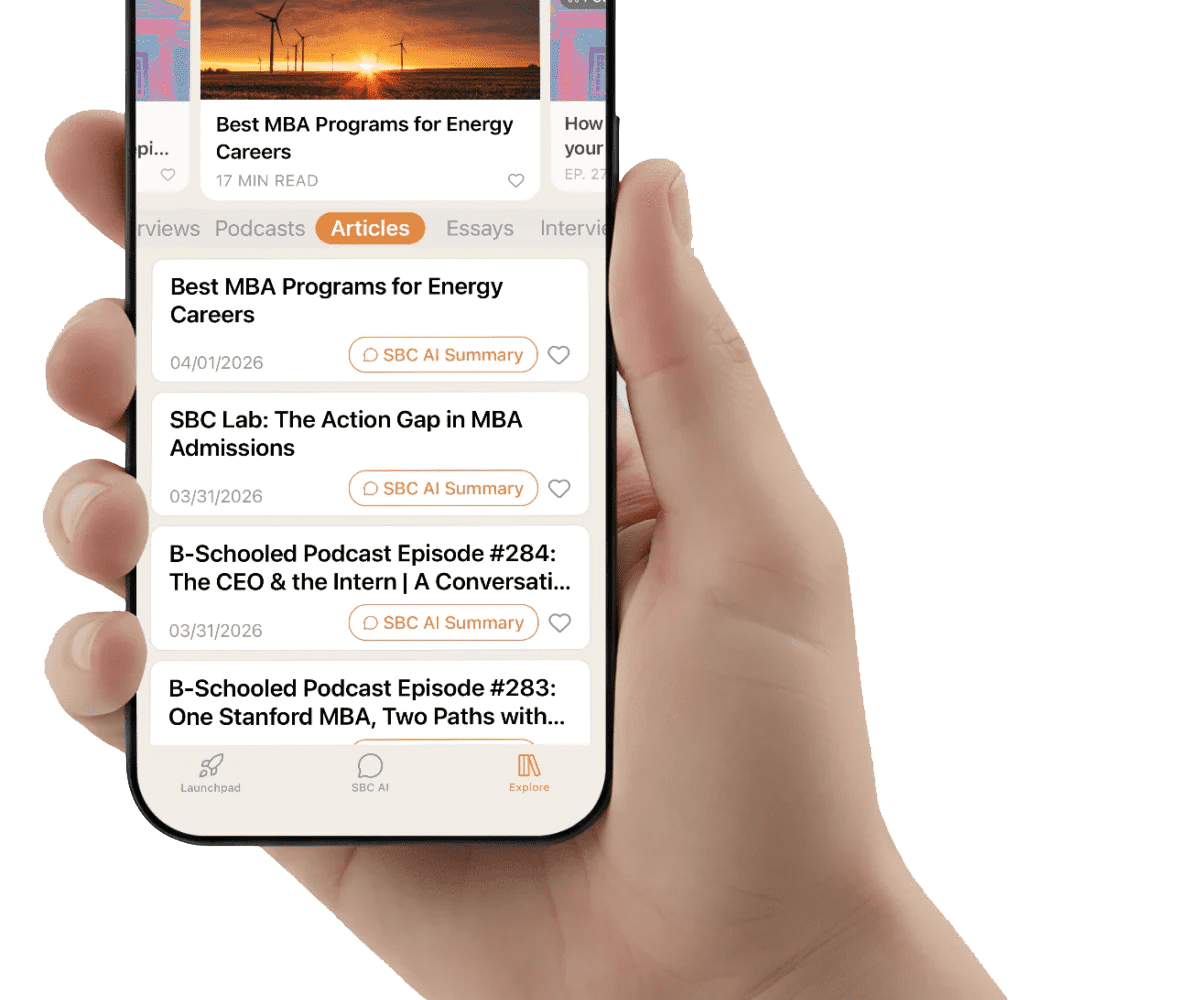
MBA Launchpad
Our AI-powered admissions assistant, MBA Launchpad by SBC, puts much of this fit research in one place. Built on 25+ years of real SBC admissions data, the app lets you compare programs on the qualities covered in this post, including teaching style, academic specialties, special programs, culture, program size, campus environment, geographic region, and whether a school is partner- and family-friendly.
You’ll also find the numbers that round out the picture: class profile averages for GPA and test scores, class size and demographics, admit rate and yield, tuition, and base income after graduation. Use it to build a balanced school list, then get a candidacy assessment and essay guidance 24/7. Premium features are currently free. Download it from the App Store or Google Play.
Here’s a snapshot of the caliber of expertise on our SBC team.















Ashley
Ashley is a former MBA Admissions Board Member for Harvard Business School (HBS), where she interviewed and evaluated thousands of business school applicants for over a six year tenure. Ashley holds an MBA from HBS. During her HBS years, Ashley was the Sports Editor for the Harbus and a member of the B-School Blades Ice Hockey Team. After HBS, she worked in Marketing at the Gillette Company on Male and Female shaving ...
×Pauline
A former associate director of admissions at Harvard Business School, Pauline served on the HBS MBA Admissions Board full-time for four years. She evaluated and interviewed HBS applicants, both on-campus and globally. Pauline's career has included sales and marketing management roles with Coca-Cola, Gillette, Procter & Gamble, and IBM. For over 10 years, Pauline has expertly guided MBA applicants, and her clients h ...
×Laura
Laura comes from the MBA Admissions Board at Harvard Business School (HBS) and is an HBS MBA alumnus. In her HBS Admissions role, she evaluated and interviewed hundreds of business school candidates, including internationals, women, military and other applicant pools, for five years. Prior to her time as a student at HBS, Laura began her career in advertising and marketing in Chicago at Leo Burnett where she worked on th ...
×Andrea
Andrea served as the Associate Director of MBA Admissions at Harvard Business School (HBS) for over five years. In this role, she provided strategic direction for student yield-management activities and also served as a full member of the admissions committee. In 2007, Andrea launched the new 2+2 Program at Harvard Business School – a program targeted at college junior applicants to Harvard Business School. Andrea has also served as a Career Coach for Harvard Business School for both cu ...
×Jennifer
Jennifer served as Admissions Officer at the Stanford (GSB) for five years. She holds an MBA from Stanford (GSB) and a B.S. in Chemical Engineering from University of Illinois Urbana-Champaign. Jennifer has over 15 years experience in guiding applicants through the increasingly competitive admissions process into top MBA programs. Having read thousands and thousands of essays and applications while at Stanford (GSB) Admiss ...
×Davina
Davina received her MBA from Stanford's Graduate School of Business (GSB), with a certificate in Public Management, and her BA in Psychology from UC Berkeley. Davina is an experienced strategic planning leader, facilitator, and business case writer who spent more than 15 years building culture, entrepreneurship, and leadership initiatives across Stanford University and the Stanford Graduate School of Business. She designed ...
×Erin
Erin served in key roles in MBA Admissions--as Director at Haas School of Business at UC Berkeley and Assistant Director at Stanford's Graduate School of Business (GSB). Erin served on the admissions committee at each school and has read thousands of applications in her career. At Haas, she served for seven years in roles that encompassed evaluation, outreach, and diversity and inclusion. During her tenure in Admissions at GSB, she was responsible for candidate evaluation, applicant outreach, ...
×Susie
Susie comes from the Admissions Office of the Stanford Graduate School of Business where she reviewed and evaluated hundreds of prospective students’ applications. She holds an MBA from Stanford’s GSB and a BA from Stanford in Economics. Prior to advising MBA applicants, Susie held a variety of roles over a 15-year period in capital markets, finance, and real estate, including as partner in one of the nation’s most innovative finance and real estate investment organizations. In that r ...
×Dione
Dione holds an MBA degree from Stanford Business School (GSB) and a BA degree from Stanford University, where she double majored in Economics and Communication with concentrations in journalism and sociology. Dione has served as an Admissions reader and member of the Minority Admissions Advisory Committee at Stanford. Dione is an accomplished and respected advocate and thought leader on education and diversity. She is ...
×Anthony
Anthony served as the Associate Director of MBA Admissions at the Wharton School at the University of Pennsylvania, where he dedicated over 10 years of expertise. During his time as a Wharton Admissions Officer, he read and reviewed thousands of applications and helped bring in a class of 800+ students a year. Anthony has traveled both domestically and internationally to recruit a ...
×Meghan
Meghan served as the Associate Director of Admissions and Marketing at the Wharton MBA’s Lauder Institute, a joint degree program combining the Wharton MBA with an MA in International Studies. In her role on the Wharton MBA admissions committee, Meghan advised domestic and international applicants; conducted interviews and information sessions domestically and overseas in Asia, Central and South America, and Europe; and evaluated applicants for admission to the program. Meghan also managed ...
×Amy
Amy comes from the Wharton School of the University of Pennsylvania where she was Associate Director. Amy devoted 12 years at the Wharton School, working closely with MBA students and supporting the admissions team. During her tenure at Wharton, Amy served as a trusted adviser to prospective applicants as well as admitted and matriculated students. She conducted admissions chats with applicants early in the admissions ...
×Ally
Ally brings six years of admissions experience to the SBC team, most recently as an Assistant Director of Admission for the full-time MBA program at Columbia Business School (CBS). During her time at Columbia, Ally was responsible for reviewing applications, planning recruitment events, and interviewing candidates for both the full-time MBA program and the Executive MBA program. She traveled both internationally and dome ...
×Emma
Emma comes from the MBA Admissions Office at Columbia Business School (CBS), where she was Associate Director. Emma conducted dozens of interviews each cycle for the MBA and EMBA programs, as well as coordinating the alumni ambassador interview program. She read and evaluated hundreds of applications each cycle, delivered information sessions to audiences across the globe, and advised countless waitlisted applicants. ×
Dana
Dana served as Assistant Director of Admissions at Columbia Business School for the Full-Time MBA program and has over 10 years of experience working in higher education. Known as a scrupulous file reader, Dana reviewed countless applications and assisted in rendering final decisions for the Admissions Committee at CBS. While leading information sessions at Columbia and on the road, Dana met and advised myriad applicants� ...
×Holly
Holly worked as a member of the NYU Stern MBA Admissions team for seven years and holds an MBA from NYU Stern. In her tenure as Director of NYU MBA Admissions, Holly worked closely with admissions teams from Columbia, Michigan Ross, UVA Darden, Cornell Johnson, Berkeley Haas, Yale SOM, and Duke Fuqua on recruiting events domestically and internationally. On the NYU Stern admissions committee, Holly conducted interviews, planned and hosted events, and trained staff on reading and interviewi ...
×Written by Yvonne Milosevic. Reviewed by Stacy Blackman. Learn more about our former admissions officers on the SBC admissions team page.


