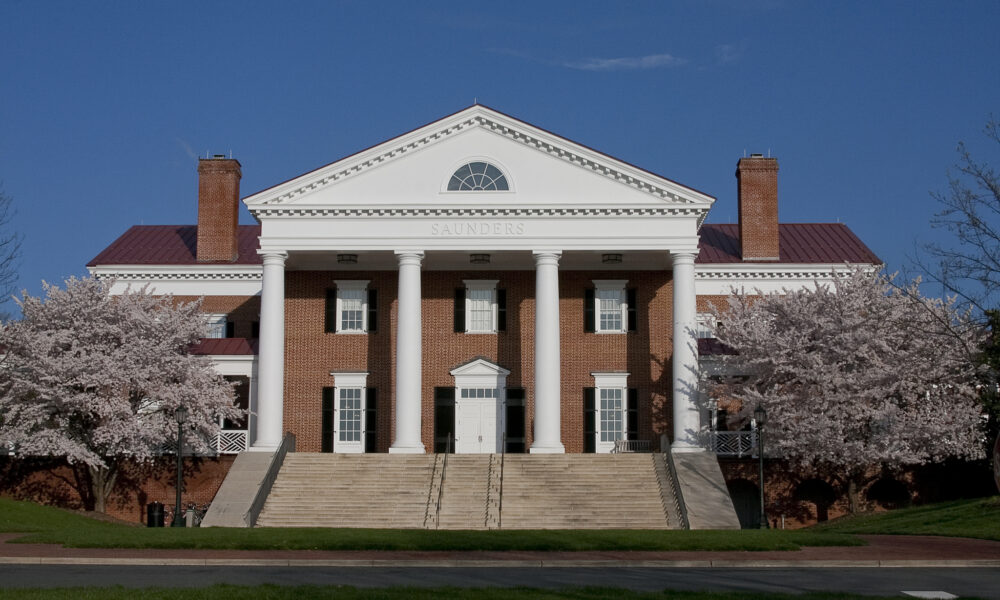
Michigan Ross Adds a Forward-Looking AI Concentration
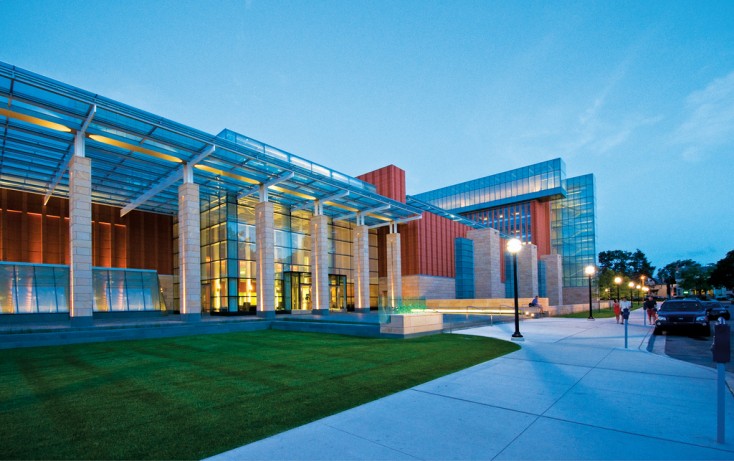
Artificial intelligence is reshaping how businesses operate—and how future leaders need to think. Recognizing that reality, the University of Michigan’s Ross School of Business has introduced a new AI concentration for Full-Time MBA students starting this academic year.
Ross joins a growing list of elite business schools incorporating artificial intelligence into their MBA curricula. Yet what stands out here is Michigan’s cross-campus integration and depth of course offerings, leveraging the university’s strengths in both business and technology.
“Companies that hire our graduates have forecasted that AI tool application is becoming just as important as strategic thinking for business leaders,” said S. Sriram, associate dean for graduate programs and Dwight F. Benton Professor of Marketing at Michigan Ross.
A Three-Part Framework for Learning and Leadership
Students pursuing the Michigan Ross AI concentration will complete a minimum of 12 elective credits, divided across three thematic areas:
- AI Fundamentals – Core courses that build understanding of key AI concepts, models, and tools.
- AI and Business Models – Strategy-focused offerings that explore how artificial intelligence transforms decision-making, innovation, and competition.
- AI and Society – Ethical, legal, and organizational perspectives on responsible AI leadership.
Primary courses include:
-
AI for Business (TO 633)
-
Customer-AI Value Creation (MKT 624)
-
Ethics for AI and Robotics (CSE 543)
Students can then customize their path through a selection of secondary or “vertical” electives, such as:
-
Healthcare Innovation and Startups (ES 620)
-
Marketing Strategy for the Digital Age (MKT 642)
-
Customer Analytics: Measuring and Managing Customer Value (MKT 626)
This combination ensures every participant gains both technical fluency and strategic vision—a hallmark of Ross’s approach to management education.

Collaboration Across the University of Michigan
One of the strongest differentiators of the new concentration is its ability to tap into the university’s broader AI ecosystem. Students can take approved electives from other units, such as the School of Information or the College of Engineering, to connect business applications of AI with the underlying science.
That interdisciplinary access means Ross MBAs can graduate fluent not only in the language of AI but also in translating it into business value.
How the Concentration Fits into the Full-Time MBA
Students are encouraged to declare the AI concentration during their first year of enrollment. All credits count toward the 57 credits required for the Full-Time MBA, and the program can still be completed in the standard two years.
Coursework and capstone projects are designed to mirror real-world challenges, helping students gain hands-on experience applying AI tools to marketing analytics, operations optimization, and product innovation.
Why This Matters for Future MBA Applicants
For aspiring MBA candidates, Ross’s announcement sends a clear message: AI literacy is no longer optional for future business leaders. Applicants who highlight their interest in this new concentration can demonstrate:
-
Career foresight. Understanding that artificial intelligence is transforming industries from finance to healthcare.
-
Strategic intent. Showing that you plan to use your MBA to bridge the gap between technology and management.
-
Leadership readiness. Framing AI as a tool for driving innovation and ethical decision-making, not just automation.
In short, if you’re planning to apply to Michigan Ross—or any top MBA program—consider how your career goals, work experience, and academic interests intersect with AI’s growing influence on business strategy.

SBC Perspective: A Broader Trend in MBA Education
Ross’s AI concentration aligns with a larger shift across the MBA landscape. Schools like MIT Sloan, NYU Stern, and Wharton have recently launched similar initiatives in analytics, machine learning, and digital strategy. The common thread? A push to prepare MBAs who can lead teams augmented by AI tools, not be replaced by them.
At Stacy Blackman Consulting, we’ve seen growing interest among applicants in AI-focused coursework and post-MBA career paths. Employers are increasingly looking for graduates who can combine quantitative insight with emotional intelligence and ethical judgment—the very skills these new programs emphasize.
By adding an AI concentration to its Full-Time MBA, Michigan Ross is making a decisive statement about the future of business education. The move underscores how strategic literacy in AI is now as vital as finance or marketing once were.
For MBA hopefuls, it’s a reminder to position yourself not just as a future business leader, but as someone ready to navigate, translate, and lead through technological transformation.
***
Interested in learning how to position your goals around emerging AI trends in your MBA applications? Whether you’re seeking career reinvention, industry change, or leadership growth, we’ll help you craft an MBA strategy rooted in vision, timing, and fit. Schedule a free 15-minute consultation with a Principal SBC Consultant today.
Here’s a snapshot of the caliber of expertise on our SBC team.











Ashley
Ashley is a former MBA Admissions Board Member for Harvard Business School (HBS), where she interviewed and evaluated thousands of business school applicants for over a six year tenure. Ashley holds an MBA from HBS. During her HBS years, Ashley was the Sports Editor for the Harbus and a member of the B-School Blades Ice Hockey Team. After HBS, she worked in Marketing at the Gillette Company on Male and Female shaving ...
×Pauline
A former associate director of admissions at Harvard Business School, Pauline served on the HBS MBA Admissions Board full-time for four years. She evaluated and interviewed HBS applicants, both on-campus and globally. Pauline's career has included sales and marketing management roles with Coca-Cola, Gillette, Procter & Gamble, and IBM. For over 10 years, Pauline has expertly guided MBA applicants, and her clients h ...
×Laura
Laura comes from the MBA Admissions Board at Harvard Business School (HBS) and is an HBS MBA alumnus. In her HBS Admissions role, she evaluated and interviewed hundreds of business school candidates, including internationals, women, military and other applicant pools, for five years. Prior to her time as a student at HBS, Laura began her career in advertising and marketing in Chicago at Leo Burnett where she worked on th ...
×Andrea
Andrea served as the Associate Director of MBA Admissions at Harvard Business School (HBS) for over five years. In this role, she provided strategic direction for student yield-management activities and also served as a full member of the admissions committee. In 2007, Andrea launched the new 2+2 Program at Harvard Business School – a program targeted at college junior applicants to Harvard Business School. Andrea has also served as a Career Coach for Harvard Business School for both cu ...
×Jennifer
Jennifer served as Admissions Officer at the Stanford (GSB) for five years. She holds an MBA from Stanford (GSB) and a B.S. in Chemical Engineering from University of Illinois Urbana-Champaign. Jennifer has over 15 years experience in guiding applicants through the increasingly competitive admissions process into top MBA programs. Having read thousands and thousands of essays and applications while at Stanford (GSB) Admiss ...
×Davina
Davina received her MBA from Stanford's Graduate School of Business (GSB), with a certificate in Public Management, and her BA in Psychology from UC Berkeley. Davina is an experienced strategic planning leader, facilitator, and business case writer who spent more than 15 years building culture, entrepreneurship, and leadership initiatives across Stanford University and the Stanford Graduate School of Business. She designed ...
×Erin K.
Erin served in key roles in MBA Admissions--as Director at Haas School of Business at UC Berkeley and Assistant Director at Stanford's Graduate School of Business (GSB). Erin served on the admissions committee at each school and has read thousands of applications in her career. At Haas, she served for seven years in roles that encompassed evaluation, outreach, and diversity and inclusion. During her tenure in Admissions at GSB, she was responsible for candidate evaluation, applicant outreach, ...
×Susie
Susie comes from the Admissions Office of the Stanford Graduate School of Business where she reviewed and evaluated hundreds of prospective students’ applications. She holds an MBA from Stanford’s GSB and a BA from Stanford in Economics. Prior to advising MBA applicants, Susie held a variety of roles over a 15-year period in capital markets, finance, and real estate, including as partner in one of the nation’s most innovative finance and real estate investment organizations. In that r ...
×Dione
Dione holds an MBA degree from Stanford Business School (GSB) and a BA degree from Stanford University, where she double majored in Economics and Communication with concentrations in journalism and sociology. Dione has served as an Admissions reader and member of the Minority Admissions Advisory Committee at Stanford. Dione is an accomplished and respected advocate and thought leader on education and diversity. She is ...
×Anthony
Anthony served as the Associate Director of MBA Admissions at the Wharton School at the University of Pennsylvania, where he dedicated over 10 years of expertise. During his time as a Wharton Admissions Officer, he read and reviewed thousands of applications and helped bring in a class of 800+ students a year. Anthony has traveled both domestically and internationally to recruit a ...
×Meghan
Meghan served as the Associate Director of Admissions and Marketing at the Wharton MBA’s Lauder Institute, a joint degree program combining the Wharton MBA with an MA in International Studies. In her role on the Wharton MBA admissions committee, Meghan advised domestic and international applicants; conducted interviews and information sessions domestically and overseas in Asia, Central and South America, and Europe; and evaluated applicants for admission to the program. Meghan also managed ...
×Amy
Amy comes from the Wharton School of the University of Pennsylvania where she was Associate Director. Amy devoted 12 years at the Wharton School, working closely with MBA students and supporting the admissions team. During her tenure at Wharton, Amy served as a trusted adviser to prospective applicants as well as admitted and matriculated students. She conducted admissions chats with applicants early in the admissions ...
×Ally
Ally brings six years of admissions experience to the SBC team, most recently as an Assistant Director of Admission for the full-time MBA program at Columbia Business School (CBS). During her time at Columbia, Ally was responsible for reviewing applications, planning recruitment events, and interviewing candidates for both the full-time MBA program and the Executive MBA program. She traveled both internationally and dome ...
×Emma
Emma comes from the MBA Admissions Office at Columbia Business School (CBS), where she was Associate Director. Emma conducted dozens of interviews each cycle for the MBA and EMBA programs, as well as coordinating the alumni ambassador interview program. She read and evaluated hundreds of applications each cycle, delivered information sessions to audiences across the globe, and advised countless waitlisted applicants. ×
Dana
Dana served as Assistant Director of Admissions at Columbia Business School for the Full-Time MBA program and has over 10 years of experience working in higher education. Known as a scrupulous file reader, Dana reviewed countless applications and assisted in rendering final decisions for the Admissions Committee at CBS. While leading information sessions at Columbia and on the road, Dana met and advised myriad applicants� ...
×Holly
Holly worked as a member of the NYU Stern MBA Admissions team for seven years and holds an MBA from NYU Stern. In her tenure as Director of NYU MBA Admissions, Holly worked closely with admissions teams from Columbia, Michigan Ross, UVA Darden, Cornell Johnson, Berkeley Haas, Yale SOM, and Duke Fuqua on recruiting events domestically and internationally. On the NYU Stern admissions committee, Holly conducted interviews, planned and hosted events, and trained staff on reading and interviewi ...
×