Is Round 2 the Right Time to Apply for an MBA? Key Considerations from an Admissions Expert

If you’re weighing whether to apply in Round 2, you’re likely juggling more than just deadlines. Test scores, essays, recommenders, work demands, and even the calendar itself all play a role in MBA Round 2 strategy—and in deciding whether Round 2 is the right move for you. Many applicants assume there’s a universally “correct” round to apply, but the reality is more nuanced.
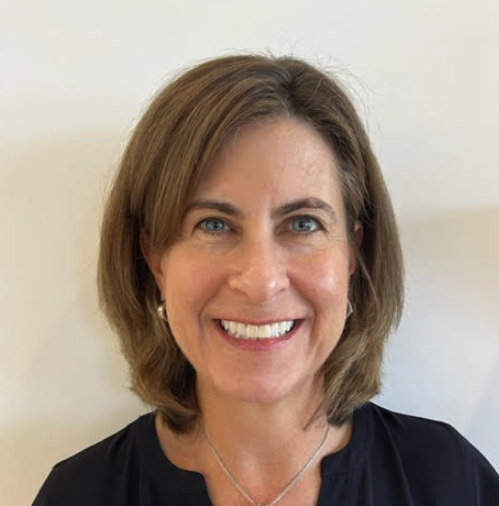
To help applicants think clearly about timing, strategy, and risk, B-Schooled host Chandler Arnold recently sat down with SBC consultant Dawn for a candid discussion on what Round 2 really means, how it compares to other rounds, and how to evaluate your own readiness. What follows is a streamlined Q&A that cuts through the noise and focuses on what actually matters.
Prefer to listen instead? Hear this conversation on the B-Schooled podcast: Round 2 Considerations
Why do MBA programs offer multiple application rounds?
Dawn: Business schools didn’t always have multiple rounds. As applicant volume grew, schools introduced additional rounds to provide flexibility for both applicants and schools. From the school’s perspective, multiple rounds allow them to assess candidate quality earlier and shape the class over time. For applicants, it creates options—but also decisions. Timing becomes part of the strategy.
Is there a real difference between applying in Round 1 versus Round 2?
Dawn: Yes, there is a difference—not in standards, but in context. In Round 1, you’re part of the first group being evaluated in that cycle. In Round 2, schools already have a sense of the applicant pool’s strength from Round 1. That doesn’t mean Round 2 is worse, but it does mean the AdCom is assessing your file with more points of comparison in place.
Are there situations where applying in Round 2 is actually an advantage?
Dawn: Absolutely. Round 2 can be a strong option if the additional time allows you to improve your application meaningfully. That could mean retaking the GMAT or GRE, earning a promotion, clarifying your goals, or strengthening your essays. What matters most is not the round—it’s whether you’re submitting your strongest possible candidacy.
Short on time but want stronger essays?
If Round 2 is your target and deadlines are close, SBC offers focused MBA essay editing services designed to help applicants sharpen clarity, positioning, and impact—without committing to full-service advising.
How should applicants think about Round 2 versus waiting for Round 3?
Dawn: Round 3 generally carries more risk. By that point, schools have already filled a significant portion of the class and may have fewer seats available. That said, fewer people apply in Round 3, and strong candidates can still get admitted.
The key question is how much improvement you realistically gain by waiting. If you’re close between Round 2 and Round 3 and don’t need substantial additional time, Round 2 is often the better choice. And of course, some schools—like HBS—don’t offer a Round 3 option at all.
What do Round 2 applicants most often underestimate?
Dawn: Timeline management. Round 2 coincides with the busiest time of year for many applicants. Work obligations ramp up, the holidays interrupt momentum, and recommenders face the same time pressures. Applicants often overestimate how much time they’ll realistically have. Being honest about your schedule—and building in buffers—is critical.
How do recommenders factor into an effective MBA Round 2 strategy?
Dawn: They’re a huge piece of the puzzle. In Round 2, I encourage applicants to be very proactive with recommenders and to set earlier internal deadlines when possible. The goal is to protect everyone from last-minute stress, especially around the holidays. Strong recommendations don’t happen under pressure.
Can you share an example of a client who benefited from applying in Round 2?
Dawn: I worked with a reapplicant—let’s call him Jay—who had previously been rejected by Harvard, Stanford, and Wharton. When we started working together, Round 1 wasn’t viable for him due to timing constraints. We evaluated his profile honestly and identified areas for improvement, including his test score.
Next, we built a very specific, realistic timeline that accounted for work demands, holidays, and recommender availability. We also focused heavily on differentiation. Because admissions committees have just reviewed thousands of Round 1 applications, Round 2 candidates need to stand out in thoughtful, authentic ways.
The result? He was admitted to all three schools as a Round 2 reapplicant. That outcome came from strategy, realism, and execution—not from choosing a particular round because of a rule.
Why do creativity and differentiation matter more in Round 2?
Dawn: Admissions committees have fresh memories of Round 1 applicants. By Round 2, they’ve seen many similar profiles and stories. That makes differentiation more critical. I encourage Round 2 applicants to think broadly about their experiences—professional and personal—and to share stories that are both authentic and unexpected, while still answering the prompt directly.
What final advice would you give applicants deciding whether to apply in Round 2?
Dawn: Avoid blanket rules. There is no formula in MBA admissions where one plus one always equals two. Each applicant’s background, timing, and goals are unique.
The most important thing is to be honest about where you are right now and what you can realistically accomplish before a deadline. Whether you apply in Round 2 or wait, the goal should always be the same: submit the strongest application you can.
So, is Round 2 the right time to apply for an MBA?
There’s no universally “right” round to apply to business school—but there is a right round for you. Round 2 can be a smart, strategic choice when it allows you to put your best foot forward. The key is evaluating your readiness with clarity, not urgency.
If you’re applying in Round 2—or advancing to interviews—SBC’s MBA interview preparation services help candidates communicate their stories with confidence, clarity, and authenticity when the stakes are high.
Not sure where to focus your efforts right now? Schedule a free 15-minute advising call to get targeted guidance on interview prep, positioning, and next steps.
Here’s a snapshot of the caliber of expertise on our SBC team.














Ashley
Ashley is a former MBA Admissions Board Member for Harvard Business School (HBS), where she interviewed and evaluated thousands of business school applicants for over a six year tenure. Ashley holds an MBA from HBS. During her HBS years, Ashley was the Sports Editor for the Harbus and a member of the B-School Blades Ice Hockey Team. After HBS, she worked in Marketing at the Gillette Company on Male and Female shaving ...
×Pauline
A former associate director of admissions at Harvard Business School, Pauline served on the HBS MBA Admissions Board full-time for four years. She evaluated and interviewed HBS applicants, both on-campus and globally. Pauline's career has included sales and marketing management roles with Coca-Cola, Gillette, Procter & Gamble, and IBM. For over 10 years, Pauline has expertly guided MBA applicants, and her clients h ...
×Laura
Laura comes from the MBA Admissions Board at Harvard Business School (HBS) and is an HBS MBA alumnus. In her HBS Admissions role, she evaluated and interviewed hundreds of business school candidates, including internationals, women, military and other applicant pools, for five years. Prior to her time as a student at HBS, Laura began her career in advertising and marketing in Chicago at Leo Burnett where she worked on th ...
×Andrea
Andrea served as the Associate Director of MBA Admissions at Harvard Business School (HBS) for over five years. In this role, she provided strategic direction for student yield-management activities and also served as a full member of the admissions committee. In 2007, Andrea launched the new 2+2 Program at Harvard Business School – a program targeted at college junior applicants to Harvard Business School. Andrea has also served as a Career Coach for Harvard Business School for both cu ...
×Jennifer
Jennifer served as Admissions Officer at the Stanford (GSB) for five years. She holds an MBA from Stanford (GSB) and a B.S. in Chemical Engineering from University of Illinois Urbana-Champaign. Jennifer has over 15 years experience in guiding applicants through the increasingly competitive admissions process into top MBA programs. Having read thousands and thousands of essays and applications while at Stanford (GSB) Admiss ...
×Davina
Davina received her MBA from Stanford's Graduate School of Business (GSB), with a certificate in Public Management, and her BA in Psychology from UC Berkeley. Davina is an experienced strategic planning leader, facilitator, and business case writer who spent more than 15 years building culture, entrepreneurship, and leadership initiatives across Stanford University and the Stanford Graduate School of Business. She designed ...
×Erin K.
Erin served in key roles in MBA Admissions--as Director at Haas School of Business at UC Berkeley and Assistant Director at Stanford's Graduate School of Business (GSB). Erin served on the admissions committee at each school and has read thousands of applications in her career. At Haas, she served for seven years in roles that encompassed evaluation, outreach, and diversity and inclusion. During her tenure in Admissions at GSB, she was responsible for candidate evaluation, applicant outreach, ...
×Susie
Susie comes from the Admissions Office of the Stanford Graduate School of Business where she reviewed and evaluated hundreds of prospective students’ applications. She holds an MBA from Stanford’s GSB and a BA from Stanford in Economics. Prior to advising MBA applicants, Susie held a variety of roles over a 15-year period in capital markets, finance, and real estate, including as partner in one of the nation’s most innovative finance and real estate investment organizations. In that r ...
×Dione
Dione holds an MBA degree from Stanford Business School (GSB) and a BA degree from Stanford University, where she double majored in Economics and Communication with concentrations in journalism and sociology. Dione has served as an Admissions reader and member of the Minority Admissions Advisory Committee at Stanford. Dione is an accomplished and respected advocate and thought leader on education and diversity. She is ...
×Anthony
Anthony served as the Associate Director of MBA Admissions at the Wharton School at the University of Pennsylvania, where he dedicated over 10 years of expertise. During his time as a Wharton Admissions Officer, he read and reviewed thousands of applications and helped bring in a class of 800+ students a year. Anthony has traveled both domestically and internationally to recruit a ...
×Meghan
Meghan served as the Associate Director of Admissions and Marketing at the Wharton MBA’s Lauder Institute, a joint degree program combining the Wharton MBA with an MA in International Studies. In her role on the Wharton MBA admissions committee, Meghan advised domestic and international applicants; conducted interviews and information sessions domestically and overseas in Asia, Central and South America, and Europe; and evaluated applicants for admission to the program. Meghan also managed ...
×Amy
Amy comes from the Wharton School of the University of Pennsylvania where she was Associate Director. Amy devoted 12 years at the Wharton School, working closely with MBA students and supporting the admissions team. During her tenure at Wharton, Amy served as a trusted adviser to prospective applicants as well as admitted and matriculated students. She conducted admissions chats with applicants early in the admissions ...
×Ally
Ally brings six years of admissions experience to the SBC team, most recently as an Assistant Director of Admission for the full-time MBA program at Columbia Business School (CBS). During her time at Columbia, Ally was responsible for reviewing applications, planning recruitment events, and interviewing candidates for both the full-time MBA program and the Executive MBA program. She traveled both internationally and dome ...
×Emma
Emma comes from the MBA Admissions Office at Columbia Business School (CBS), where she was Associate Director. Emma conducted dozens of interviews each cycle for the MBA and EMBA programs, as well as coordinating the alumni ambassador interview program. She read and evaluated hundreds of applications each cycle, delivered information sessions to audiences across the globe, and advised countless waitlisted applicants. ×
Dana
Dana served as Assistant Director of Admissions at Columbia Business School for the Full-Time MBA program and has over 10 years of experience working in higher education. Known as a scrupulous file reader, Dana reviewed countless applications and assisted in rendering final decisions for the Admissions Committee at CBS. While leading information sessions at Columbia and on the road, Dana met and advised myriad applicants� ...
×Holly
Holly worked as a member of the NYU Stern MBA Admissions team for seven years and holds an MBA from NYU Stern. In her tenure as Director of NYU MBA Admissions, Holly worked closely with admissions teams from Columbia, Michigan Ross, UVA Darden, Cornell Johnson, Berkeley Haas, Yale SOM, and Duke Fuqua on recruiting events domestically and internationally. On the NYU Stern admissions committee, Holly conducted interviews, planned and hosted events, and trained staff on reading and interviewi ...
×


