Use These Top Tips to Nail the New Harvard MBA Essays
For the first time in over a decade, Harvard Business School updated its application essay requirement for the Class of 2027. Given its pinnacle position as the world’s most coveted MBA program, the change naturally generated tremendous buzz in admissions circles. Appropriately, Stacy Blackman’s B-Schooled podcast has launched a three-part series to give this development the attention it deserves. To do so, SBC consultant Yvette recently joined co-host Chandler Arnold to offer her expert insights on approaching these new Harvard MBA essays.
Yvette is an active HBS alum who leads the HBS Alumni Circle in the Bay area and has co-written several HBS case studies. Yvette has often chosen the road less traveled and nudged norms around the globe. Her career trajectory includes a stop in Dubai, where she built a successful real estate services company and launched the “Grubhub” of the Middle East.
She’s also held positions at Deloitte, Fannie Mae, and UBS Investment Bank in New York. Though born in Los Angeles, her childhood in Mexico City and her many travels worldwide have shaped Yvette’s international approach to everything she does.
Today’s post covers the top notes of Chandler and Yvette’s in-depth conversation on B-Schooled about the first new HBS essay question. We’ll bring you fresh insights on essays two and three in the coming weeks and invite you to listen to all three podcast episodes for the full deep-dive experience.
Are you curious about your chances of getting into Harvard Business School? Contact us to talk strategy with a free 15-minute advising session with an SBC Principal Consultant.
Preparing for the New Harvard MBA Essays
Before jumping in, remember there’s no “silver bullet” or one right way to answer any of these questions. A brilliant approach for one applicant might not work for another, so do what feels authentic to you. Let’s look at the first of the new Harvard MBA essays.
Business-Minded Essay: Please reflect on how your experiences have influenced your career choices and aspirations and the impact you will have on the businesses, organizations, and communities you plan to serve. (up to 300 words)
Big picture, applicants should ensure that they develop and showcase two essential skills in their essays, says SBC consultant Yvette. The first is communication, and the second is creating compelling content. You’re articulating a thoughtful story and vision in a way that convinces the admissions team of your leadership potential. As you take stock of your journey, think about where you’ve been and where you’re going. Also, think through what you’ve learned in the process that has guided you along the way.
Many applicants find it helpful to deconstruct the question and consider how to put it back together. For example, the first component is “experiences that influence.” The second is making connections between past career choices that tell the story of a journey. HBS admissions has explicitly said this question change allows applicants to tell more about their journey. Third, state visionary goals and connect them to that influence. And finally, consider how your goals will impact those you serve.
The Four Pillars
- Experiences that have influenced me
- Connection to career choices
- Connection to goals
- How those goals impact the people I serve
It is daunting to do all of this in 300 words or less. One way to approach this essay is to write a paragraph for each and then see how that flows. While the question doesn’t come right out and ask about your goals, it does ask about your experiences and how they’ve influenced your choices and aspirations. What have you learned from these experiences? How has this altered the way you look at the world and the impact you want to have professionally? Goals are a shorthand way of saying all that.
Experiences that Have Influenced You
These are deeply personal and could be anything from formative childhood experiences to professional challenges. Consider where and how you grew up. Who impacted you? Identify experiences that changed you in a way that influenced your later decisions and choices. These experiences have the power to transform your future.
A smart tactic is to use the wording from the question in your answer. HBS asks for an experience that influenced you, so directly use that same language. For example, “My experience growing up in Texas influenced me to….”. Then, you want to tell a powerful story by going beyond that initial context.
“It’s not just the fact that you want to share,” SBC consultant Chandler explains. “It’s how that situation changed the way you thought, opened your mind, challenged conventions, or forced you to think differently.” How did you grow in that context, or how did that experience shape how you think about the world?
Avoiding Common Pitfalls in the Harvard MBA Essays
When answering this question, two common pitfalls are assuming your personal story isn’t as interesting as others or assuming your story is infinitely fascinating. “Remember, these admissions officers are reading thousands of essays and might spend 15 minutes on your entire application,” Chandler notes. “So, choose situations and stories and examples that stand out.”
“When that admissions officer is making dinner that night, you want yours to be the story they can’t stop thinking about,” he adds. You want to inspire them with your unique perspective and experiences.
For example, many MBA applicants are applying from a consulting background. But if the first sentence of your essay is, “On my first consulting project, I felt overwhelmed,” that’s not a unique experience. There could be hundreds or even thousands of people who have felt that way.

We’re not saying that you can’t write about that experience—just that if you choose to do so, make it memorable. You might say, “Look, there are probably thousands of people talking about an overwhelming experience as a first-year consultant. But here’s why my takeaway was especially informative.” Keeping that context in mind is crucial.
Connecting Experiences to Career Choices
Once you’ve described the life experience that influenced you to believe or feel a certain way, use the second paragraph to connect it to your career choices. Yvette advises taking stock of the intentional steps in your career and realizing that some might be more informed than others.
For example, you might write, “I went into consulting because of X, and then while in consulting, I shifted into strategy because of Y.” Show how you did so intentionally because of that early life influence you described in the first paragraph. Your shift could be functional, from one role to the other. Or it could be the types of projects you cover. You may have changed companies from one that was technical, such as an engineering firm, to a broader, more business strategy-oriented consulting role.
“It could even be a shift in your approach,” says Chandler. “Maybe you stayed at the same company, in the same industry, in the same role, but you approach that work differently now. There’s that journey element of how your thinking evolved and how you grew as a person.”

Share the Vision Behind the Goals
Your next task for paragraph three is articulating your future goals. “It’s important to share the vision behind those goals,” Yvette explains. “It might be to be a partner at a consulting firm or to start your own company. But there is usually a vision behind that of something you want to change or impact. It’s important to inject that into the essay because that allows you to connect it to that early influence.”
Not everyone’s goals must be altruistic, of course. Founding a non-profit isn’t the only way to convey that you want to do good. Instead of trying to see everything through a non-profit lens, recognize that every business can positively or negatively impact customers, employees, communities, or the environment.
Also, unlike many other business schools, Harvard doesn’t ask a “Why HBS?” essay. They know why MBA hopefuls are targeting this prestigious program. “Harvard doesn’t need you to tell it how amazing it is,” Yvette says. “Harvard wants to hear about your experiences, learning, growth, goals, or what you will bring to the HBS experience. But they don’t need to be reminded how amazing their professors are.”
Learn more about SBC’s 2-hour strategy engagement, which explores your strengths and weaknesses, target schools, positioning and differentiation AND allows you to test the waters with your consultant before committing to a full package.
Impact on Others
Paragraph four is where you focus on your impact on others. “When you think about impact, you want to picture yourself as the middle cog to a lot of different stakeholders around you,” Yvette explains. Those could be employees, investors, the environment, customers, or the world at large.
Consider a couple of stakeholders and describe the concrete impact you’ll have on them because you plan to lead differently or your organization has goals beyond the bottom line.
Notice the wording in this essay. HBS is asking about those you serve—not lead. They’re asking you to see yourself as a leader who impacts people around you by your choices in how you lead. We’re all passionate about impact, but give it your own flavor.
Be specific and describe the vehicle as well as the impact. So, if the goal is to have cleaner oceans, what methods will you use to deliver on that? What solutions will you try and test while you’re in the MBA and networking with all those other outstanding professionals?
Draft and Edit, On Repeat
As we wrap up this overview, we know that applicants everywhere are asking, “How in the world do we do all of that in 300 words?!” While the result needs to meet that word count, realize that your initial drafts of this essay might be 900-1,000 words.
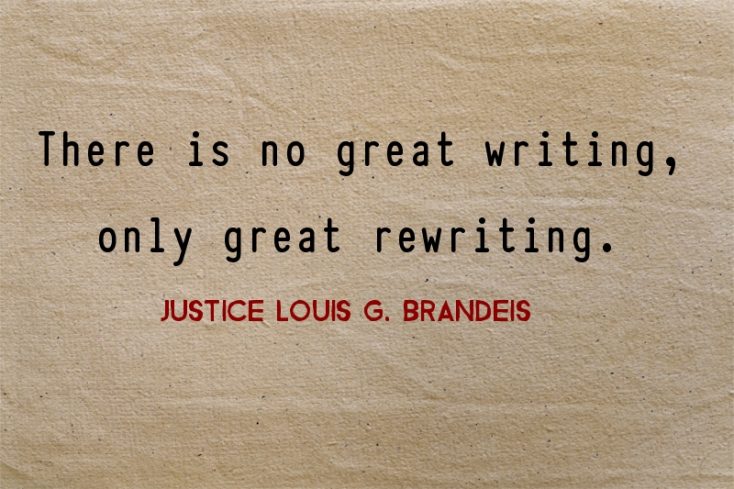
You’ll explore many ideas as you jot down everything you want to say. Then you iterate, iterate, iterate. You work on narrowing your focus and making the narrative tighter until you have a cohesive essay response.
In conclusion, tackling the new Harvard MBA essays requires thoughtful reflection, strategic storytelling, and careful editing. You can create a compelling narrative that resonates with the admissions team by highlighting your unique experiences, intentional career choices, visionary goals, and the broader impact you aim to have.
Authenticity is critical—showcase your true self and how you plan to lead and serve others. Stay tuned for more insights on essays two and three, and consider reaching out for a free 15-minute advising session with an SBC Principal Consultant to refine your approach further.
***
Stacy Blackman Consulting offers multiple services to meet your MBA application needs, from our All-In Partnership to hourly help with essay editing, resume review, and much more! Contact us today for a free 15-minute advising session to talk strategy with a Principal SBC consultant.
Here’s a snapshot of the caliber of expertise on our SBC team.









Ashley
Ashley is a former MBA Admissions Board Member for Harvard Business School (HBS), where she interviewed and evaluated thousands of business school applicants for over a six year tenure. Ashley holds an MBA from HBS. During her HBS years, Ashley was the Sports Editor for the Harbus and a member of the B-School Blades Ice Hockey Team. After HBS, she worked in Marketing at the Gillette Company on Male and Female shaving ...
×Pauline
A former associate director of admissions at Harvard Business School, Pauline served on the HBS MBA Admissions Board full-time for four years. She evaluated and interviewed HBS applicants, both on-campus and globally. Pauline's career has included sales and marketing management roles with Coca-Cola, Gillette, Procter & Gamble, and IBM. For over 10 years, Pauline has expertly guided MBA applicants, and her clients h ...
×Laura
Laura comes from the MBA Admissions Board at Harvard Business School (HBS) and is an HBS MBA alumnus. In her HBS Admissions role, she evaluated and interviewed hundreds of business school candidates, including internationals, women, military and other applicant pools, for five years. Prior to her time as a student at HBS, Laura began her career in advertising and marketing in Chicago at Leo Burnett where she worked on th ...
×Andrea
Andrea served as the Associate Director of MBA Admissions at Harvard Business School (HBS) for over five years. In this role, she provided strategic direction for student yield-management activities and also served as a full member of the admissions committee. In 2007, Andrea launched the new 2+2 Program at Harvard Business School – a program targeted at college junior applicants to Harvard Business School. Andrea has also served as a Career Coach for Harvard Business School for both cu ...
×Jennifer
Jennifer served as Admissions Officer at the Stanford (GSB) for five years. She holds an MBA from Stanford (GSB) and a B.S. in Chemical Engineering from University of Illinois Urbana-Champaign. Jennifer has over 15 years experience in guiding applicants through the increasingly competitive admissions process into top MBA programs. Having read thousands and thousands of essays and applications while at Stanford (GSB) Admiss ...
×Davina
Davina received her MBA from Stanford's Graduate School of Business (GSB), with a certificate in Public Management, and her BA in Psychology from UC Berkeley. Davina is an experienced strategic planning leader, facilitator, and business case writer who spent more than 15 years building culture, entrepreneurship, and leadership initiatives across Stanford University and the Stanford Graduate School of Business. She designed ...
×Erin K.
Erin served in key roles in MBA Admissions--as Director at Haas School of Business at UC Berkeley and Assistant Director at Stanford's Graduate School of Business (GSB). Erin served on the admissions committee at each school and has read thousands of applications in her career. At Haas, she served for seven years in roles that encompassed evaluation, outreach, and diversity and inclusion. During her tenure in Admissions at GSB, she was responsible for candidate evaluation, applicant outreach, ...
×Susie
Susie comes from the Admissions Office of the Stanford Graduate School of Business where she reviewed and evaluated hundreds of prospective students’ applications. She holds an MBA from Stanford’s GSB and a BA from Stanford in Economics. Prior to advising MBA applicants, Susie held a variety of roles over a 15-year period in capital markets, finance, and real estate, including as partner in one of the nation’s most innovative finance and real estate investment organizations. In that r ...
×Dione
Dione holds an MBA degree from Stanford Business School (GSB) and a BA degree from Stanford University, where she double majored in Economics and Communication with concentrations in journalism and sociology. Dione has served as an Admissions reader and member of the Minority Admissions Advisory Committee at Stanford. Dione is an accomplished and respected advocate and thought leader on education and diversity. She is ...
×Anthony
Anthony served as the Associate Director of MBA Admissions at the Wharton School at the University of Pennsylvania, where he dedicated over 10 years of expertise. During his time as a Wharton Admissions Officer, he read and reviewed thousands of applications and helped bring in a class of 800+ students a year. Anthony has traveled both domestically and internationally to recruit a ...
×Meghan
Meghan served as the Associate Director of Admissions and Marketing at the Wharton MBA’s Lauder Institute, a joint degree program combining the Wharton MBA with an MA in International Studies. In her role on the Wharton MBA admissions committee, Meghan advised domestic and international applicants; conducted interviews and information sessions domestically and overseas in Asia, Central and South America, and Europe; and evaluated applicants for admission to the program. Meghan also managed ...
×Amy
Amy comes from the Wharton School of the University of Pennsylvania where she was Associate Director. Amy devoted 12 years at the Wharton School, working closely with MBA students and supporting the admissions team. During her tenure at Wharton, Amy served as a trusted adviser to prospective applicants as well as admitted and matriculated students. She conducted admissions chats with applicants early in the admissions ...
×Ally
Ally brings six years of admissions experience to the SBC team, most recently as an Assistant Director of Admission for the full-time MBA program at Columbia Business School (CBS). During her time at Columbia, Ally was responsible for reviewing applications, planning recruitment events, and interviewing candidates for both the full-time MBA program and the Executive MBA program. She traveled both internationally and dome ...
×Emma
Emma comes from the MBA Admissions Office at Columbia Business School (CBS), where she was Associate Director. Emma conducted dozens of interviews each cycle for the MBA and EMBA programs, as well as coordinating the alumni ambassador interview program. She read and evaluated hundreds of applications each cycle, delivered information sessions to audiences across the globe, and advised countless waitlisted applicants. ×
Dana
Dana served as Assistant Director of Admissions at Columbia Business School for the Full-Time MBA program and has over 10 years of experience working in higher education. Known as a scrupulous file reader, Dana reviewed countless applications and assisted in rendering final decisions for the Admissions Committee at CBS. While leading information sessions at Columbia and on the road, Dana met and advised myriad applicants� ...
×Holly
Holly worked as a member of the NYU Stern MBA Admissions team for seven years and holds an MBA from NYU Stern. In her tenure as Director of NYU MBA Admissions, Holly worked closely with admissions teams from Columbia, Michigan Ross, UVA Darden, Cornell Johnson, Berkeley Haas, Yale SOM, and Duke Fuqua on recruiting events domestically and internationally. On the NYU Stern admissions committee, Holly conducted interviews, planned and hosted events, and trained staff on reading and interviewi ...
×