The Truth About Building A Startup During An MBA

Does an MBA make sense for aspiring founders? It’s a question that generates endless debate on Reddit, GMAT Club, and among entrepreneurs themselves. The skeptical case against building a startup during an MBA is well-rehearsed: business school costs too much, the timing never seems right, and successful founders often skipped it entirely.
Here’s what that conventional debate misses: The question isn’t whether you need an MBA to launch a startup. The real question is what happens when you’re actually building a startup during your MBA, and whether those two years can genuinely stack the deck in your favor.
We’ve interviewed several MBA entrepreneurs on our B-Schooled podcast—from tech founders to consumer goods CEOs to SBC’s own founder, Stacy Blackman, who launched her first company during her Kellogg MBA. And across all those conversations, certain patterns emerge about what building a startup during an MBA actually involves—and what separates the founders who leverage their program effectively from those who struggle.
What Building a Startup During Your MBA Actually Looks Like
Most applicants imagine they’ll take some innovation classes, polish a pitch deck, maybe enter a business plan competition. The reality of building a startup during business school looks quite different—and understanding this matters whether you’re applying or already enrolled.
Active founders during their MBA face a completely different program than their consulting-track classmates. Many compress their academic commitments to create longer blocks of startup-focused time. They skip international treks that others treat as mandatory. They say no to most student clubs. One leadership position maximum. Coffee chats become strategic, not social.
This isn’t the “balanced MBA experience” prospective students imagine. But it is intentional.
Reality is messy. Some founders hit critical momentum during their program and face decisions about whether to stay enrolled or go all-in on their venture. Others discover their initial idea isn’t viable and pivot multiple times throughout their two years. The structured timeline of an MBA—with its semesters, recruiting cycles, and graduation deadlines—doesn’t always align with startup milestones.
What we’ve seen work: Treating the first year as dedicated exploration time while managing academics efficiently, then using the summer and second year to build serious traction. Founders who try to maintain a traditional MBA experience while also launching typically end up doing neither particularly well. Understanding these realities should directly inform how you approach the application process.

Two Paths, Same Degree
Not everyone arrives at business school ready to launch. Many future founders take a different approach—and understanding which path fits you matters long before you submit your applications.
Some spend their MBA preparing to start something three to five years later. They join other students’ founding teams through entrepreneurship courses and competitions, getting hands-on experience without the financial risk. They absorb frameworks, build relationships with professors, and identify potential co-founders—treating the MBA as strategic preparation rather than immediate launch.
Then, they recruit for traditional post-MBA roles—often in venture capital, tech, or industries where they want domain expertise. The MBA degree gives them credentials and network. The job gives them runway and learning. Both paths work. The mistake is trying to do both simultaneously without acknowledging the tradeoffs, or worse, being unclear in your application about which path you’re actually taking.
What This Means for Your MBA Application
First, your goals essay needs to demonstrate you understand exactly which gaps the MBA fills for your specific venture—not just “learn entrepreneurship” but concrete needs like financial modeling for SaaS pricing, growth marketing frameworks, or navigating Series A fundraising.
Second, you should address timing directly: why pursue an MBA now rather than building full-time or joining an accelerator? The strongest applications explain how the program’s resources align with their current stage—whether that’s pre-idea exploration, co-founder search, or scaling an existing venture.
Third, school selection matters more for active founders than almost any other applicant type. You need programs with flexible scheduling, professors who actively advise startups, and strong connections to capital in your industry. Generic “great entrepreneurship program” research won’t cut it.
Fourth, you need to give admissions committees confidence in your post-MBA outcomes. Schools care about employment statistics, and “launching a startup” can feel nebulous compared to traditional career paths. The strongest entrepreneurial applications include a credible backup plan—not because you lack commitment, but because it demonstrates maturity.
Frame this as optionality: you might pursue product management at a high-growth startup, venture capital, or corporate innovation roles if your venture doesn’t gain traction during the program. This shows you’ve thought realistically about multiple paths while keeping entrepreneurship as your primary goal.
Need help crafting an application that demonstrates genuine strategic fit with entrepreneurship programs? Our consultants specialize in helping founders tell their story.
The Professor Factor
Here’s something we’ve noticed across countless founder interviews: The entrepreneurs who get the most value from their MBA consistently point to one underutilized resource—their professors. Not because of what they teach in lectures. Because of what happens when you meet them during office hours with real problems to solve.
The former CMO who teaches growth marketing can spot the holes in your customer acquisition model. The search fund expert who evaluates businesses for private equity can tell you whether your market is big enough to attract serious capital. The finance professor who sits on boards can introduce you to investors in your space.
These aren’t hypothetical scenarios; we’ve seen these patterns repeatedly. One founder we spoke with credits a professor’s feedback on her marketing plan as pivotal to her company’s early traction. Another used office hours to pressure-test financial models before a fundraising round.
The catch? You need to earn it. Professors invest time in students who show up prepared, ask smart questions, and actually implement feedback. Skip their class to work on your startup, and you’ve lost access to exactly the people who could help you succeed.
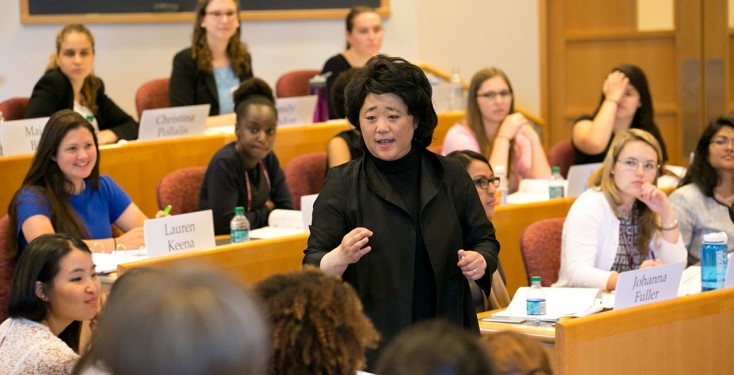
This matters for your application too. When you’re researching schools, don’t just list “great entrepreneurship faculty” in your essays. Identify specific professors whose expertise aligns with your venture needs. Mention their work. Explain what you’d ask them. Admissions committees can tell the difference between generic research and genuine strategic thinking.
The Equity Math Nobody Tells You About
This calculation rarely appears in the “MBA vs. startup” debate, but it’s come up in nearly every conversation we’ve had with founders who built startups during their MBA.
Y Combinator takes 7% of your company. Top accelerators take similar stakes.
A full-tuition MBA scholarship? Takes 0%.
This isn’t an argument against accelerators—many provide tremendous value, and some founders do both an accelerator and an MBA at different stages. But for founders who can secure meaningful scholarship money, the MBA math changes dramatically. You get access to world-class advisors, a built-in recruiting pipeline, and curriculum that teaches you financial modeling and growth strategy. All without diluting your ownership.
We’ve worked with applicants who specifically targeted schools known for generous merit aid to entrepreneurial candidates. Some won fellowships that covered tuition plus summer stipends, allowing them to focus full-time on their venture between first and second year rather than taking a traditional internship.
The caveat matters: This calculation only works if you’re not paying sticker price. Graduating with $200K in debt while your startup burns cash creates impossible pressure. But merit scholarships and entrepreneurship grants can make top programs surprisingly cost-effective for founders.
If cost is a factor (and for most founders, it should be), start by identifying top MBA programs for entrepreneurship that offer substantial merit aid to entrepreneurial candidates, then target those schools strategically.
What Actually Matters When Choosing Programs
Culture isn’t just a marketing talking point—and this is something we emphasize constantly with our clients evaluating schools.
The questions your professors ask shape what you build. A school focused on social impact will push you to consider climate neutrality and responsibility from day one. A program steeped in tech will challenge you to incorporate cutting-edge innovation. Neither approach is better, but they produce different companies.
We’ve heard from founders who felt energized by their program’s scrappy, mission-driven culture—and others who felt misaligned with a more competitive, prestige-focused environment. These differences weren’t apparent from marketing materials. They emerged through conversations with current students and honest reflection about personal values.
The students around you matter too. You’ll need classmates willing to help model your financials at midnight, connect you with legal resources, or introduce you to investors in their network. These favors happen more naturally in collaborative cultures than competitive ones.
Your location determines your ecosystem access. Silicon Valley proximity means different investor relationships than New York or Boston. The undergraduate population at your university becomes your potential talent pool.
The strongest entrepreneur applications demonstrate you’ve researched how a program’s specific culture—its risk tolerance, innovation philosophy, collaborative norms—aligns with the type of company you’re building. Admissions committees can spot the difference between surface-level research and genuine strategic fit.
The Risk Question Everyone Gets Wrong
“Aren’t MBA students too risk-averse to be entrepreneurs?”
We hear this constantly—from applicants questioning whether business school is right for them, and from skeptics who think MBAs lack entrepreneurial DNA.
Here’s a better frame, drawn from years of watching MBA founders build companies: Most successful entrepreneurs aren’t Elon Musk. They’re people who built something customers wanted while maintaining reasonably balanced lives.
MBA students do tend toward balance. They think about downside protection. They want optionality. These aren’t weaknesses for founders—they’re often advantages. The businesses that survive aren’t always led by the most risk-loving founders. They’re led by people who can manage uncertainty without ignoring it.
Balance doesn’t mean lack of ambition. It means caring about multiple aspects of your life simultaneously. The MBA founders we’ve interviewed who achieved successful exits often credit their “risk-aware” approach—they tested thoroughly before scaling, they built financial models that accounted for worst-case scenarios, they maintained relationships outside their startup.
Plenty of MBA founders have built massive companies while staying married and seeing their kids. That’s not compromise—it’s sustainability.
Don’t apologize for being thoughtful about risk. Frame it as strategic. Show how your balanced approach actually positions you to build something lasting rather than flaming out spectacularly.

The Honest Calculation
An MBA won’t teach you to be an entrepreneur. You learn that by building things and watching them succeed or fail.
But across the many stories we’ve heard—from those who thrived building startups during their MBA to those who wished they’d waited, from scholarship recipients who launched debt-free to those who struggled under financial pressure—certain truths emerge about what a top program can actually deliver.
What an MBA can do:
- Compress the timeline between idea and launch
- Connect you with advisors who’ve solved your exact problems before
- Surround you with potential co-founders, early employees, and advisors
- Give you structured time to test ideas before committing
- Build skills in areas that matter (finance, marketing, operations) without trial-and-error
- Create a network you’ll tap for decades
What it can’t do:
- Guarantee your startup will succeed
- Replace the work of actually talking to customers
- Make the journey easy or comfortable
- Eliminate the need for luck and timing
When we work with aspiring entrepreneurs on their applications, the strongest candidates aren’t those claiming they’ll definitely launch the next unicorn. They’re the ones who can articulate precisely why now is the right time for an MBA in their founder journey—whether that means active building during the program or strategic preparation for later.
They understand the trade-offs. They’ve thought through the financial implications. They can name the specific professors, programs, or resources at their target schools that align with their needs. They’re honest about what they don’t know.
The question for you isn’t whether an MBA is required for entrepreneurship. It’s whether these two years—with their specific resources, trade-offs, and opportunity costs—align with where you are in your founder journey and what you need to learn next.
For some, the answer is an obvious yes. For others, it’s clearly no. And for many, the answer depends on factors like scholarship availability, the urgency of your idea, and whether you’re ready to sacrifice the traditional MBA experience for focused building time.
That’s the kind of clarity that makes for both successful founders and compelling applications.
Thinking about building a startup during your MBA? Our admissions consultants help founders craft applications that demonstrate both business acumen and startup potential. Schedule a free 15-minute consultation to discuss your specific situation.
Here’s a snapshot of the caliber of expertise on our SBC team.
















Ashley
Ashley is a former MBA Admissions Board Member for Harvard Business School (HBS), where she interviewed and evaluated thousands of business school applicants for over a six year tenure. Ashley holds an MBA from HBS. During her HBS years, Ashley was the Sports Editor for the Harbus and a member of the B-School Blades Ice Hockey Team. After HBS, she worked in Marketing at the Gillette Company on Male and Female shaving ...
×Pauline
A former associate director of admissions at Harvard Business School, Pauline served on the HBS MBA Admissions Board full-time for four years. She evaluated and interviewed HBS applicants, both on-campus and globally. Pauline's career has included sales and marketing management roles with Coca-Cola, Gillette, Procter & Gamble, and IBM. For over 10 years, Pauline has expertly guided MBA applicants, and her clients h ...
×Laura
Laura comes from the MBA Admissions Board at Harvard Business School (HBS) and is an HBS MBA alumnus. In her HBS Admissions role, she evaluated and interviewed hundreds of business school candidates, including internationals, women, military and other applicant pools, for five years. Prior to her time as a student at HBS, Laura began her career in advertising and marketing in Chicago at Leo Burnett where she worked on th ...
×Andrea
Andrea served as the Associate Director of MBA Admissions at Harvard Business School (HBS) for over five years. In this role, she provided strategic direction for student yield-management activities and also served as a full member of the admissions committee. In 2007, Andrea launched the new 2+2 Program at Harvard Business School – a program targeted at college junior applicants to Harvard Business School. Andrea has also served as a Career Coach for Harvard Business School for both cu ...
×Jennifer
Jennifer served as Admissions Officer at the Stanford (GSB) for five years. She holds an MBA from Stanford (GSB) and a B.S. in Chemical Engineering from University of Illinois Urbana-Champaign. Jennifer has over 15 years experience in guiding applicants through the increasingly competitive admissions process into top MBA programs. Having read thousands and thousands of essays and applications while at Stanford (GSB) Admiss ...
×Davina
Davina received her MBA from Stanford's Graduate School of Business (GSB), with a certificate in Public Management, and her BA in Psychology from UC Berkeley. Davina is an experienced strategic planning leader, facilitator, and business case writer who spent more than 15 years building culture, entrepreneurship, and leadership initiatives across Stanford University and the Stanford Graduate School of Business. She designed ...
×Erin K.
Erin served in key roles in MBA Admissions--as Director at Haas School of Business at UC Berkeley and Assistant Director at Stanford's Graduate School of Business (GSB). Erin served on the admissions committee at each school and has read thousands of applications in her career. At Haas, she served for seven years in roles that encompassed evaluation, outreach, and diversity and inclusion. During her tenure in Admissions at GSB, she was responsible for candidate evaluation, applicant outreach, ...
×Susie
Susie comes from the Admissions Office of the Stanford Graduate School of Business where she reviewed and evaluated hundreds of prospective students’ applications. She holds an MBA from Stanford’s GSB and a BA from Stanford in Economics. Prior to advising MBA applicants, Susie held a variety of roles over a 15-year period in capital markets, finance, and real estate, including as partner in one of the nation’s most innovative finance and real estate investment organizations. In that r ...
×Dione
Dione holds an MBA degree from Stanford Business School (GSB) and a BA degree from Stanford University, where she double majored in Economics and Communication with concentrations in journalism and sociology. Dione has served as an Admissions reader and member of the Minority Admissions Advisory Committee at Stanford. Dione is an accomplished and respected advocate and thought leader on education and diversity. She is ...
×Anthony
Anthony served as the Associate Director of MBA Admissions at the Wharton School at the University of Pennsylvania, where he dedicated over 10 years of expertise. During his time as a Wharton Admissions Officer, he read and reviewed thousands of applications and helped bring in a class of 800+ students a year. Anthony has traveled both domestically and internationally to recruit a ...
×Meghan
Meghan served as the Associate Director of Admissions and Marketing at the Wharton MBA’s Lauder Institute, a joint degree program combining the Wharton MBA with an MA in International Studies. In her role on the Wharton MBA admissions committee, Meghan advised domestic and international applicants; conducted interviews and information sessions domestically and overseas in Asia, Central and South America, and Europe; and evaluated applicants for admission to the program. Meghan also managed ...
×Amy
Amy comes from the Wharton School of the University of Pennsylvania where she was Associate Director. Amy devoted 12 years at the Wharton School, working closely with MBA students and supporting the admissions team. During her tenure at Wharton, Amy served as a trusted adviser to prospective applicants as well as admitted and matriculated students. She conducted admissions chats with applicants early in the admissions ...
×Ally
Ally brings six years of admissions experience to the SBC team, most recently as an Assistant Director of Admission for the full-time MBA program at Columbia Business School (CBS). During her time at Columbia, Ally was responsible for reviewing applications, planning recruitment events, and interviewing candidates for both the full-time MBA program and the Executive MBA program. She traveled both internationally and dome ...
×Emma
Emma comes from the MBA Admissions Office at Columbia Business School (CBS), where she was Associate Director. Emma conducted dozens of interviews each cycle for the MBA and EMBA programs, as well as coordinating the alumni ambassador interview program. She read and evaluated hundreds of applications each cycle, delivered information sessions to audiences across the globe, and advised countless waitlisted applicants. ×
Dana
Dana served as Assistant Director of Admissions at Columbia Business School for the Full-Time MBA program and has over 10 years of experience working in higher education. Known as a scrupulous file reader, Dana reviewed countless applications and assisted in rendering final decisions for the Admissions Committee at CBS. While leading information sessions at Columbia and on the road, Dana met and advised myriad applicants� ...
×Holly
Holly worked as a member of the NYU Stern MBA Admissions team for seven years and holds an MBA from NYU Stern. In her tenure as Director of NYU MBA Admissions, Holly worked closely with admissions teams from Columbia, Michigan Ross, UVA Darden, Cornell Johnson, Berkeley Haas, Yale SOM, and Duke Fuqua on recruiting events domestically and internationally. On the NYU Stern admissions committee, Holly conducted interviews, planned and hosted events, and trained staff on reading and interviewi ...
×